A pressure reducing valve (PRV) is one of the most important yet overlooked components of a home’s plumbing system.
Installed on the main water line, this valve automatically lowers excessive municipal water pressure to a safe, consistent level before it enters your home’s pipes, fixtures, and appliances. Without a properly functioning PRV, high water pressure can gradually damage plumbing components, shorten the lifespan of water heaters and appliances, and increase the likelihood of costly leaks.
Many homeowners don’t realize they have a pressure reducing valve until it begins to fail or they experience problems with unusually high or fluctuating water pressure. Understanding how a PRV works, why it’s important, and the warning signs of failure can help you protect your plumbing system and avoid expensive repairs.
Learn more about our Pressure Reducing Valve Service options →What Is a Pressure Reducing Valve?
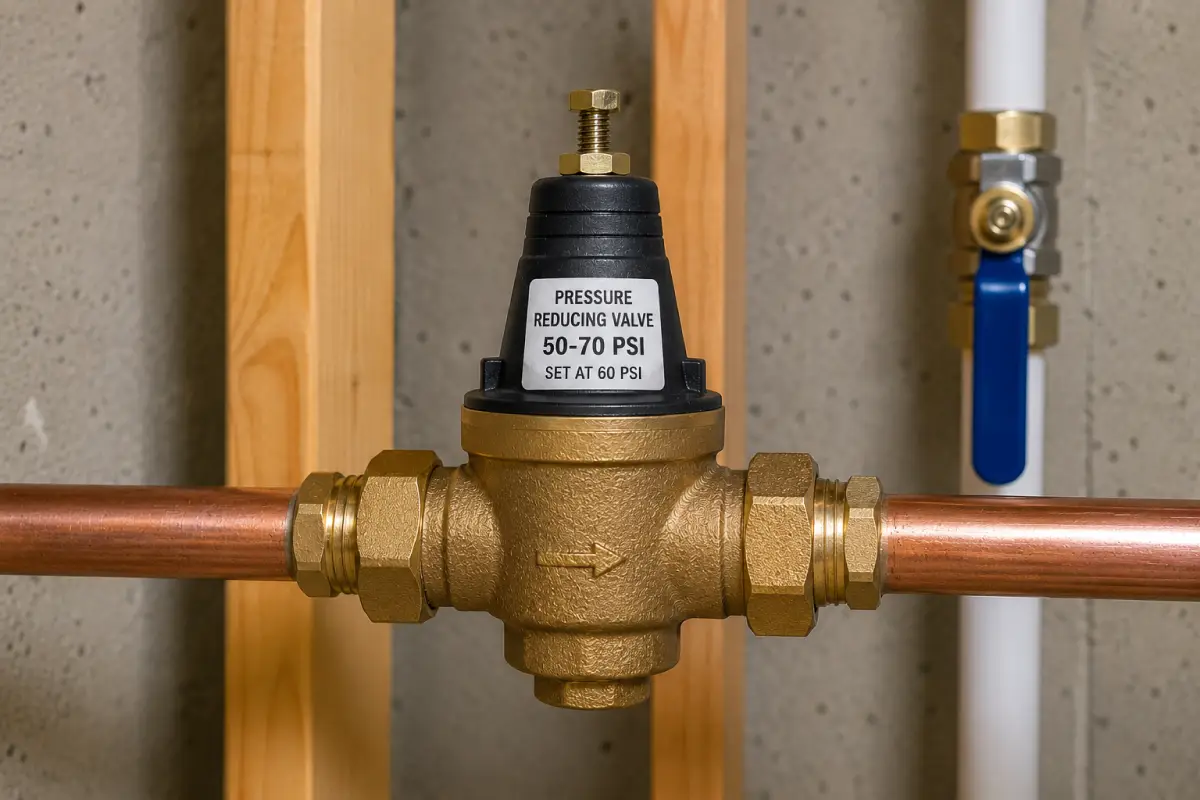
A pressure reducing valve, often abbreviated as a PRV and sometimes called a water pressure regulator or pressure regulator valve, is a mechanical device installed on your home’s main water supply line. Its purpose is to automatically reduce the incoming water pressure from the municipal water system to a level that is safe for your home’s plumbing.
Municipal water systems frequently deliver water at pressures that are much higher than most residential plumbing systems are designed to handle. While this higher pressure helps move water throughout a city’s distribution network, it can place unnecessary stress on household plumbing if it enters the home without regulation.
A properly adjusted PRV continuously monitors incoming pressure and automatically reduces it to a consistent level before the water reaches faucets, toilets, showers, appliances, and water heaters.
Why Is Water Pressure So Important?
Many homeowners assume that stronger water pressure is always better. While good water flow certainly makes showers and faucets feel more powerful, excessively high water pressure can quietly damage your plumbing system for years before obvious problems appear.
Every plumbing fixture, pipe, valve, and appliance in your home experiences the force created by water pressure. When that pressure consistently exceeds safe operating levels, the entire plumbing system experiences additional wear every time water is used.
Problems Caused by High Water Pressure
- Premature pipe leaks
- Dripping faucets
- Running toilets
- Water hammer and loud pipe noises
- Shortened water heater lifespan
- Damaged washing machine hoses
- Dishwasher and refrigerator valve failures
- Higher monthly water bills
- Premature plumbing fixture wear
These problems often develop gradually, making it difficult to recognize that excessive water pressure is the underlying cause until significant damage has already occurred.
Where Is a Pressure Reducing Valve Located?
A pressure reducing valve is typically installed on the main water line immediately after the home’s main shutoff valve and before the plumbing system branches off to individual fixtures. This allows the valve to regulate the pressure for every faucet, toilet, shower, appliance, and water heater throughout the home.
In most homes, the PRV is located near where the municipal water line enters the house. Depending on the home’s construction, it may be found in a basement, crawl space, utility room, garage, or mechanical closet.
Common Places to Find a PRV
- Near the main water shutoff valve
- Inside a basement utility room
- Within a crawl space
- Inside a garage near the water service entrance
- In a mechanical or utility closet
- Near the water meter on some residential systems
If you cannot locate a pressure reducing valve, it does not necessarily mean your home doesn’t have one. Some valves are installed inside wall cavities or below access panels, while older homes may not have one if local water pressure has historically remained within an acceptable range.
How Can You Tell If a Pressure Reducing Valve Is Failing?
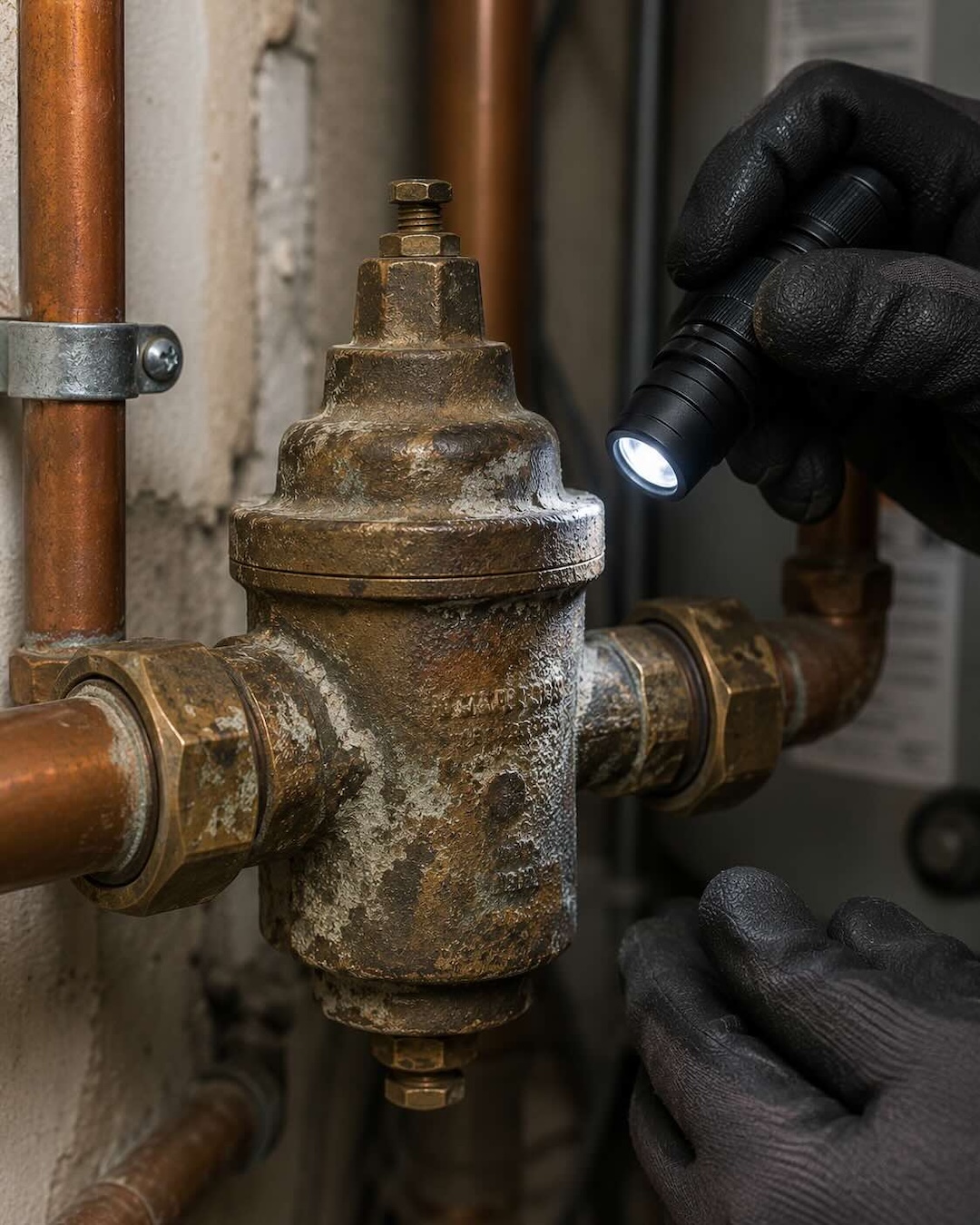
Like any mechanical plumbing component, a pressure reducing valve eventually wears out. Internal springs weaken, diaphragms deteriorate, and mineral deposits can interfere with the valve’s ability to regulate pressure accurately. As these components age, homeowners often begin noticing changes in water pressure throughout the house.
Most PRVs fail gradually rather than all at once. Because the changes are often subtle at first, many homeowners don’t realize the valve is the source of the problem until damage begins appearing elsewhere in the plumbing system.
Common Signs of a Failing Pressure Reducing Valve
- Water pressure suddenly becomes much stronger than normal.
- Water pressure feels noticeably weaker throughout the home.
- Pressure changes throughout the day without explanation.
- Pipes bang or make loud noises when fixtures are turned off.
- Faucets begin dripping more frequently.
- Toilets start running or require more frequent repairs.
- Water heater relief valve begins discharging water.
- Appliances begin failing earlier than expected.
While each of these problems may have other causes, experiencing several of them at the same time often points toward a pressure regulator that is no longer functioning properly.
Can a Pressure Reducing Valve Be Adjusted?
Yes. Most residential pressure reducing valves include an adjustment screw that allows a plumber to increase or decrease the outlet pressure. However, making adjustments without first measuring the home’s water pressure can actually create additional plumbing problems.
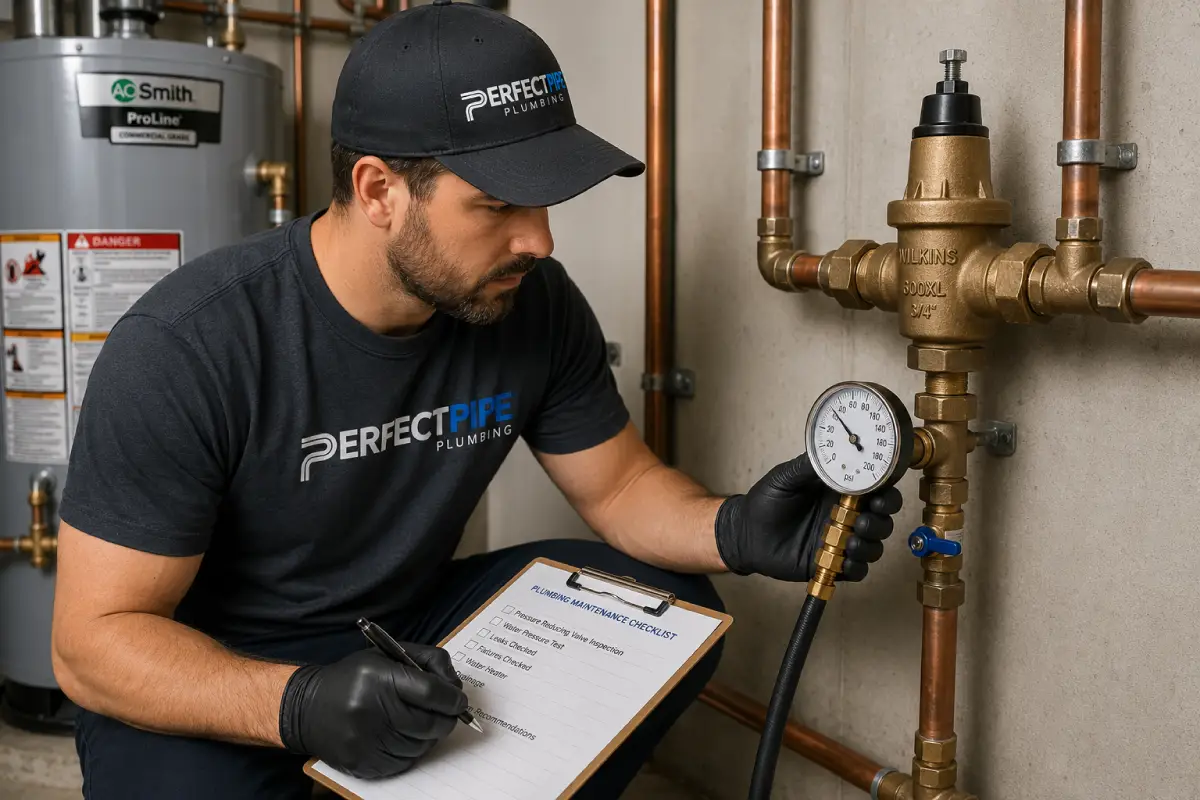
Before changing any settings, the home’s water pressure should be tested using an accurate pressure gauge attached to an exterior hose bib or laundry connection. This establishes a baseline and helps determine whether the PRV is operating correctly.
When an Adjustment May Help
- The valve was never properly calibrated after installation.
- Minor pressure changes have occurred over time.
- The municipal water supply pressure has recently changed.
When Adjustment Usually Won’t Solve the Problem
- The internal spring has weakened.
- The diaphragm has worn out.
- Mineral deposits have damaged internal components.
- The valve is leaking externally.
- The valve is over 10 to 15 years old and showing multiple symptoms.
In these situations, replacing the valve is usually a more reliable long-term solution than repeatedly attempting to adjust it.
How Long Does a Pressure Reducing Valve Last?
Most residential pressure reducing valves last between 10 and 15 years, although the actual lifespan depends on several factors including incoming water pressure, water quality, mineral content, installation quality, and the amount of daily water usage.
Homes with consistently high municipal water pressure often place greater demands on the valve, causing internal components to wear more quickly. Likewise, hard water can allow mineral deposits to accumulate inside the valve, reducing its effectiveness over time.
Factors That Affect PRV Lifespan
- Incoming municipal water pressure
- Water hardness and mineral buildup
- Overall household water usage
- Quality of the valve itself
- Proper installation
- Routine plumbing maintenance
Even if a pressure reducing valve appears to be functioning normally, periodic inspections can identify early signs of wear before pressure problems begin affecting the rest of the plumbing system.
Can a Pressure Reducing Valve Be Repaired?
In some situations, a pressure reducing valve can be adjusted or serviced if the problem is minor. However, because the valve’s internal components operate under constant pressure, repairs are often temporary once significant wear has occurred.
Many plumbers recommend replacing an aging PRV rather than attempting extensive repairs, particularly if the valve has already reached the end of its expected lifespan or is causing inconsistent water pressure throughout the home.
| Condition | Recommended Solution |
|---|---|
| Minor pressure adjustment needed | Adjust the existing PRV. |
| Inconsistent pressure throughout the home | Inspect and likely replace the PRV. |
| Visible external leak from the valve | Replace the PRV. |
| Valve is 10–15+ years old with pressure problems | Replacement is usually the most reliable option. |
| Repeated pressure-related plumbing issues | Inspect the entire pressure regulation system. |
Replacing a worn pressure reducing valve before it fails completely can help prevent damage to pipes, fixtures, appliances, and your water heater while maintaining consistent water pressure throughout the home.
How a Pressure Reducing Valve Protects Your Plumbing System
Many homeowners think of a pressure reducing valve (PRV) as a convenience feature that simply improves water pressure. In reality, its primary purpose is to protect nearly every component connected to your plumbing system. Every time a faucet is opened, a toilet is flushed, or an appliance uses water, the PRV helps maintain a consistent pressure that reduces unnecessary stress on your home’s plumbing.
Without proper pressure regulation, high municipal water pressure can slowly weaken pipe joints, wear out fixture seals, shorten appliance lifespans, and increase the likelihood of unexpected plumbing failures. While these problems may develop over several years, they often result in expensive repairs that could have been prevented by maintaining safe water pressure.
Components a Pressure Reducing Valve Helps Protect
- Water supply pipes
- Pipe fittings and joints
- Kitchen and bathroom faucets
- Toilets and fill valves
- Water heaters
- Dishwashers
- Washing machines
- Ice maker supply lines
- Refrigerator water connections
- Outdoor hose bibs and irrigation systems
A properly functioning PRV helps protect thousands of dollars’ worth of plumbing equipment throughout your home—not just the pipes themselves.
What Happens If You Don’t Have a PRV?
Not every home requires a pressure reducing valve, but homes supplied with consistently high municipal water pressure often benefit significantly from having one installed. If incoming water pressure regularly exceeds safe operating levels, the plumbing system absorbs that additional stress every hour of every day.
Over time, excessive pressure can accelerate normal wear and increase the likelihood of plumbing failures throughout the home. Because the damage usually occurs gradually, many homeowners don’t recognize high water pressure as the underlying cause until multiple plumbing problems begin appearing.
Potential Long-Term Effects of High Water Pressure
- Recurring plumbing leaks
- Frequent faucet repairs
- Running toilets
- Burst washing machine hoses
- Water heater pressure issues
- Premature appliance replacement
- Higher monthly water bills
- Reduced plumbing system lifespan
Addressing excessive water pressure early is often far less expensive than repairing the cumulative damage it can cause over time.
When Should You Replace a Pressure Reducing Valve?
There is no universal replacement schedule for a pressure reducing valve, but there are situations where replacement is generally the most practical and cost-effective option. If the valve no longer maintains consistent pressure, leaks externally, or continues causing plumbing issues despite adjustments, replacement is often recommended.
Homeowners should also consider replacement when the valve has reached the end of its expected service life and other plumbing upgrades are already being performed. Replacing an aging PRV during related plumbing work can often reduce future labor costs while improving the overall reliability of the system.
Replacement Is Often Recommended When:
- Water pressure fluctuates throughout the day.
- Pressure remains consistently too high or too low.
- The valve leaks externally.
- The adjustment screw no longer changes outlet pressure.
- The valve has reached the end of its service life.
- Multiple plumbing fixtures are experiencing pressure-related problems.
Frequently Asked Questions About Pressure Reducing Valves
Can a pressure reducing valve increase low water pressure?
No. A PRV is designed to reduce incoming pressure when it is too high. If your home already has low water pressure, the problem is likely caused by another issue such as a hidden leak, partially closed shutoff valve, pipe corrosion, or municipal supply problem.
Can high water pressure damage a water heater?
Yes. Excessive water pressure places additional stress on water heaters, relief valves, expansion tanks, and internal components. Over time, this can shorten the lifespan of the system and contribute to leaks or premature failure.
Warning Signs Your Water Heater Is About to FailCan high water pressure cause pipe leaks?
Absolutely. Excessive pressure increases stress on pipe joints, fittings, valves, and older plumbing materials. While high pressure may not create a leak overnight, it can significantly increase the likelihood of leaks developing over time.
Signs Your Pipes Are About to BurstCan I replace a pressure reducing valve myself?
Replacing a PRV requires shutting off the home’s main water supply, disconnecting the existing valve, installing the new regulator correctly, and verifying the outlet pressure using a pressure gauge. Improper installation or adjustment can lead to ongoing pressure problems, which is why many homeowners choose to have the work performed by a licensed plumber.
Final Thoughts
A pressure reducing valve is one of the most important components protecting your home’s plumbing system. By regulating incoming municipal water pressure, it helps reduce wear on pipes, fixtures, appliances, and water heaters while providing consistent water pressure throughout the home.
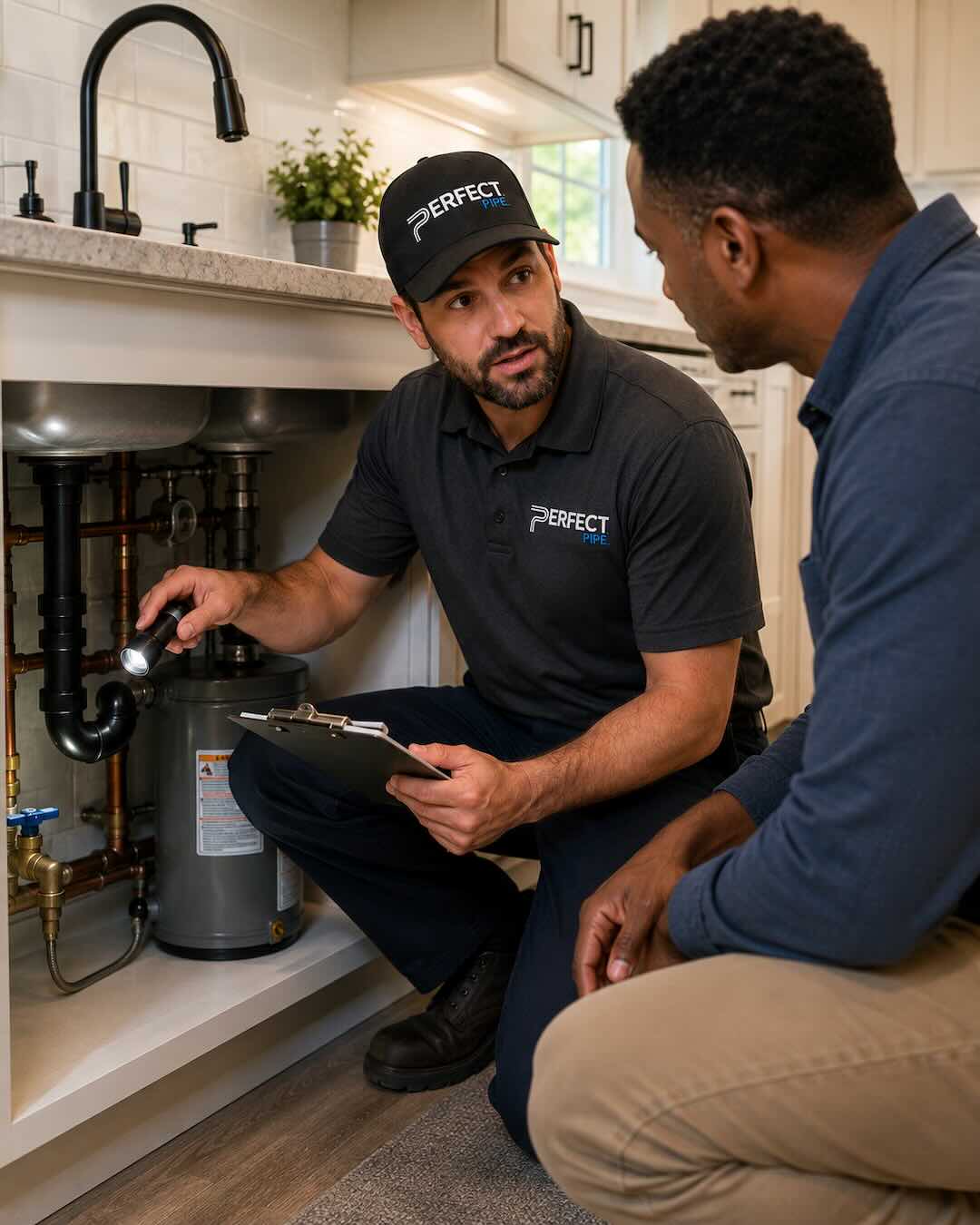
If you’ve noticed unusually high water pressure, fluctuating water flow, recurring plumbing leaks, or fixtures that seem to wear out prematurely, the pressure reducing valve may be the source of the problem. Having your plumbing system inspected can determine whether the valve is operating correctly or if adjustment or replacement is the best solution.
At Perfect Pipe Plumbing, we help homeowners diagnose water pressure problems, test plumbing system pressure, and provide professional pressure reducing valve installation and replacement to protect homes from unnecessary plumbing damage and extend the life of their plumbing systems.