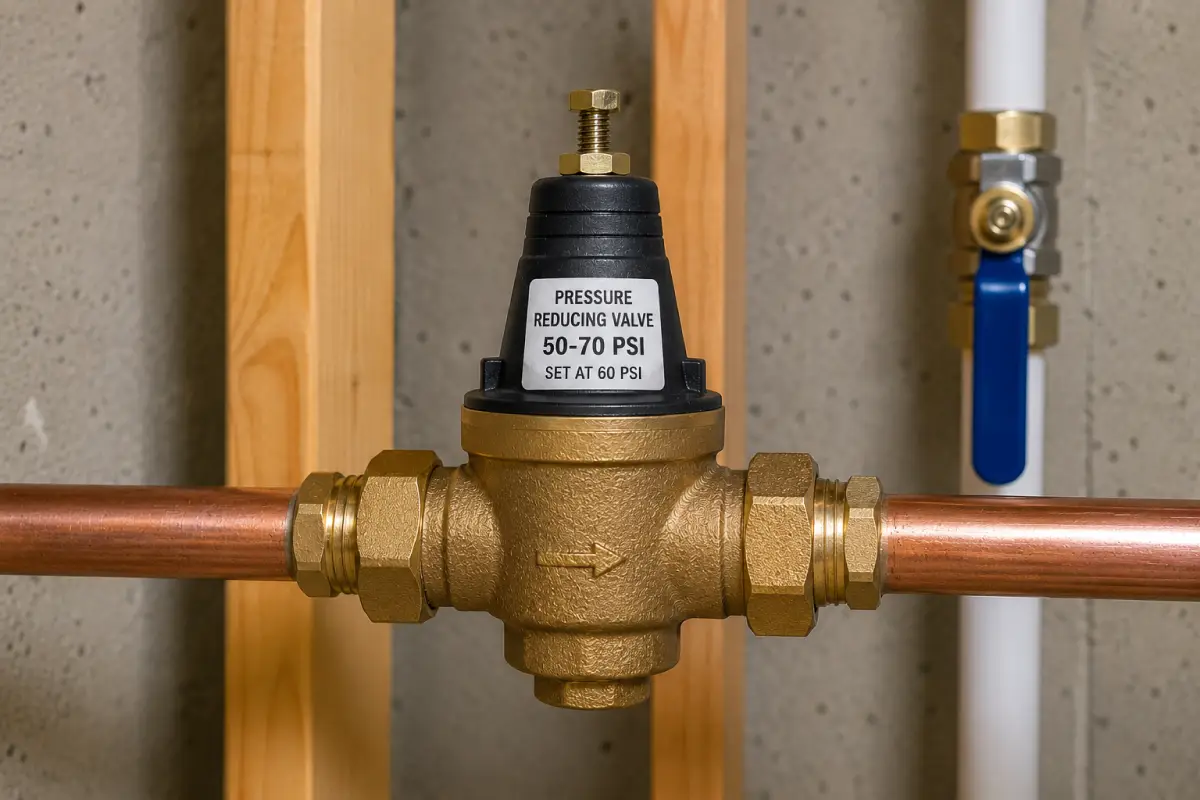
A pressure reducing valve (PRV) is one of the hardest-working components in your home’s plumbing system. Every time you turn on a faucet, flush a toilet, or run an appliance, the PRV helps regulate incoming water pressure to protect your pipes, fixtures, and appliances from unnecessary wear.
Like any mechanical plumbing component, however, a pressure reducing valve won’t last forever. Understanding its typical lifespan and recognizing the warning signs of failure can help you avoid expensive plumbing repairs and keep your home’s water pressure operating safely.
Learn more about our Pressure Reducing Valve Installation & Replacement services →How Long Does a Pressure Reducing Valve Typically Last?
Most pressure reducing valves last between 10 and 15 years, although some continue working reliably for longer while others require replacement sooner. Their lifespan depends on several factors, including water quality, incoming municipal water pressure, how frequently water is used, and the quality of the valve itself.
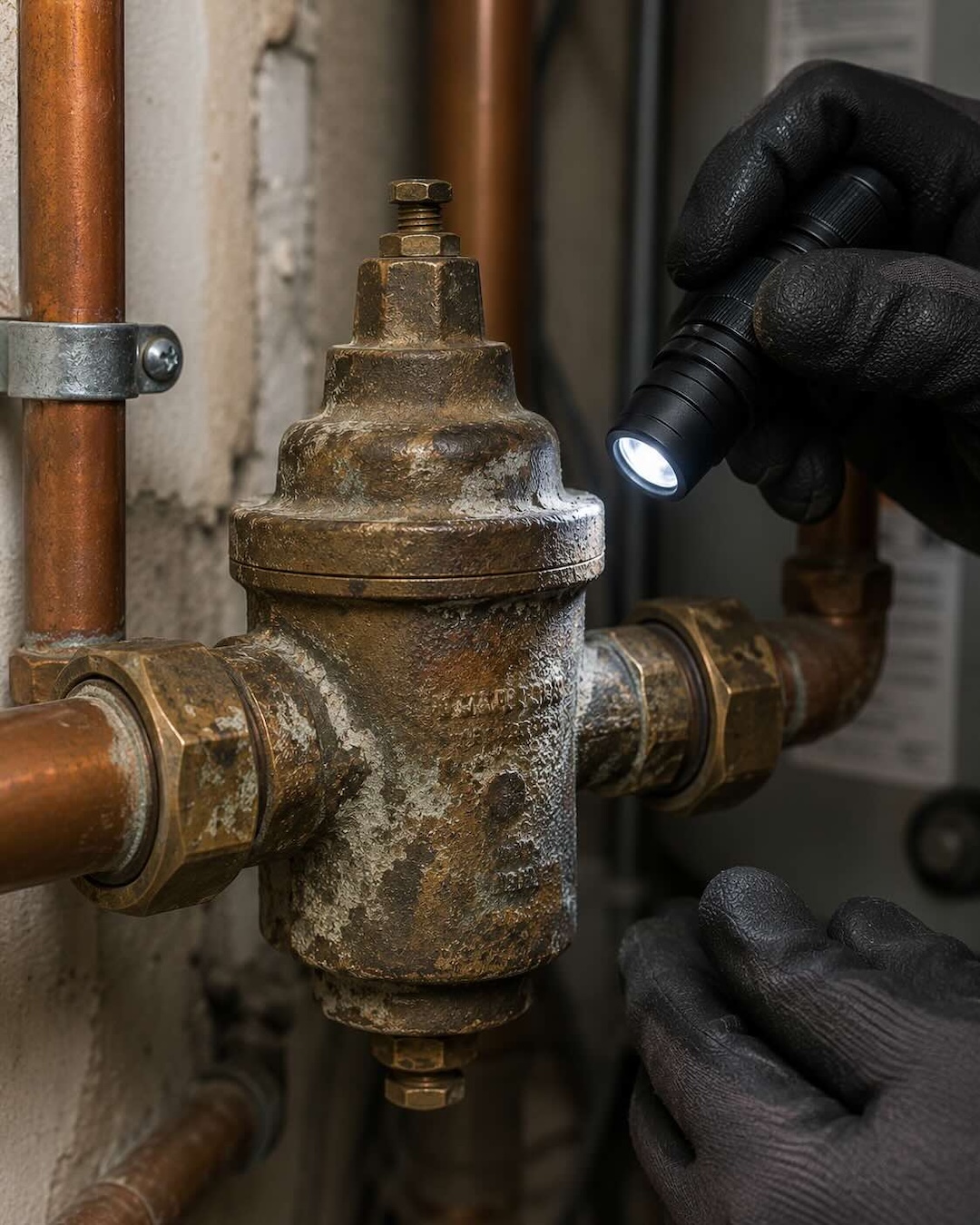
Because a PRV operates every time water enters your home’s plumbing system, its internal components naturally wear over time. Springs, diaphragms, seals, and other moving parts gradually lose their ability to regulate pressure accurately.
Although many homeowners don’t think about their PRV until problems develop, replacing an aging valve before it fails completely can help prevent leaks, appliance damage, and unnecessary wear throughout the plumbing system.
What Affects the Lifespan of a Pressure Reducing Valve?
Not every pressure reducing valve wears out at the same rate. Homes supplied with extremely high municipal water pressure often place more stress on the valve, causing internal components to work harder every day. Likewise, minerals and sediment in the water supply can gradually build up inside the valve, reducing its ability to regulate pressure accurately.
Routine plumbing inspections and maintaining proper water pressure can often help maximize the service life of the valve.
- High incoming municipal water pressure.
- Hard water and mineral buildup.
- Sediment inside the plumbing system.
- Heavy daily household water usage.
- Poor installation or incorrect valve sizing.
- The overall quality of the pressure reducing valve.
Even under ideal conditions, normal wear eventually affects every PRV, making periodic inspection an important part of home plumbing maintenance.
What Are the Signs a Pressure Reducing Valve Is Wearing Out?
Most pressure reducing valves don’t suddenly stop working overnight. Instead, they gradually become less effective at maintaining consistent water pressure throughout the home. The warning signs often appear slowly and may be mistaken for unrelated plumbing problems.
Recognizing these symptoms early allows homeowners to replace the valve before excessive water pressure causes more serious damage.
- Water pressure suddenly becomes much stronger or weaker.
- Pressure changes throughout the day.
- Dripping faucets begin appearing throughout the home.
- Toilets require frequent repairs.
- Pipes make banging or hammering noises.
- Water heater relief valve begins discharging water.
- Multiple plumbing leaks develop over time.
These warning signs don’t always confirm the PRV has failed, but they do indicate that your home’s water pressure should be professionally evaluated.
Can a Pressure Reducing Valve Be Repaired?
In some situations, a pressure reducing valve can be adjusted or repaired if the problem is minor. However, because most residential PRVs are sealed mechanical devices with multiple internal components, replacement is often the most reliable and cost-effective long-term solution once significant wear has occurred.
If your PRV is approaching the end of its expected lifespan and you’re experiencing pressure-related plumbing problems, replacing the valve usually provides more consistent performance than attempting repeated repairs.
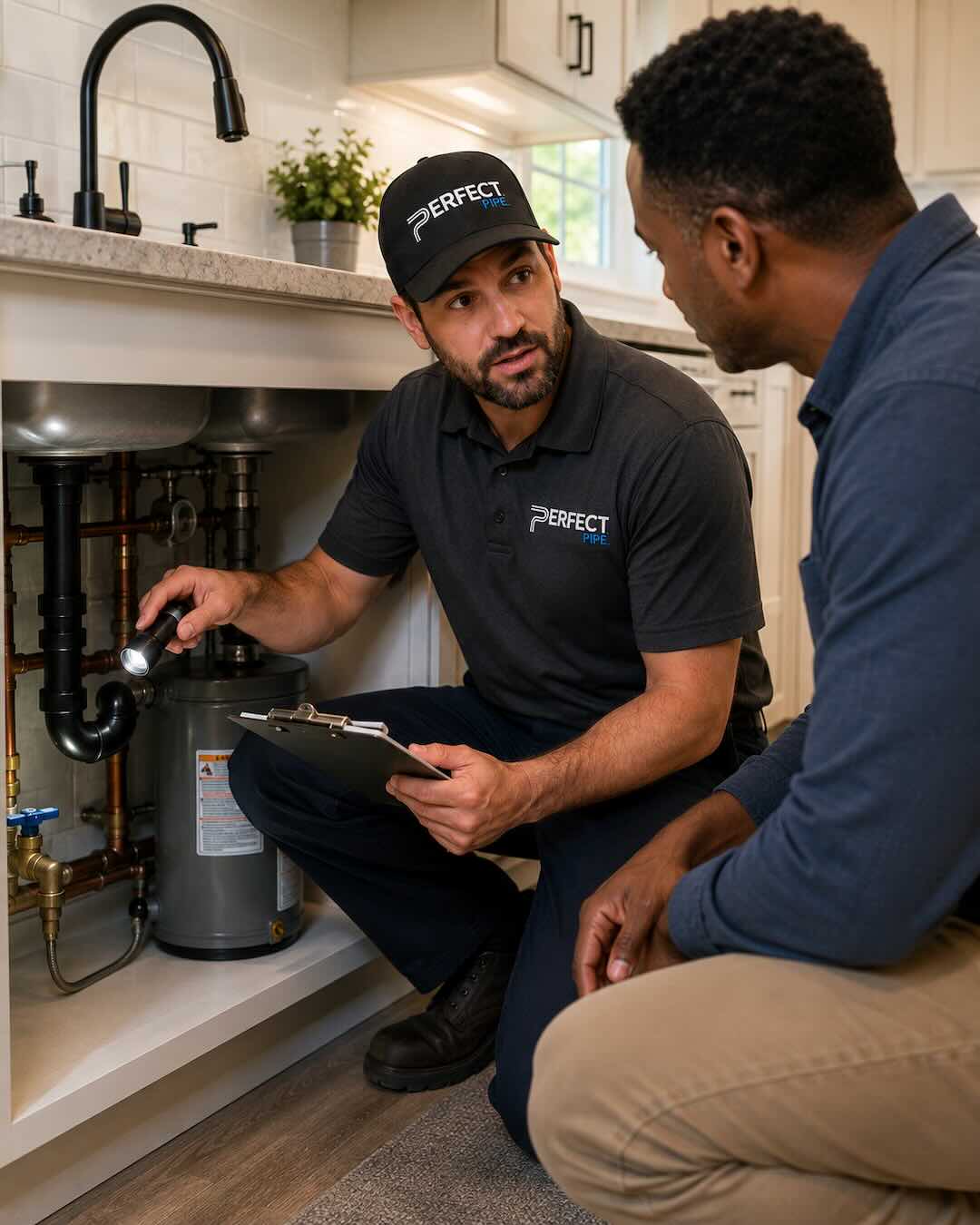
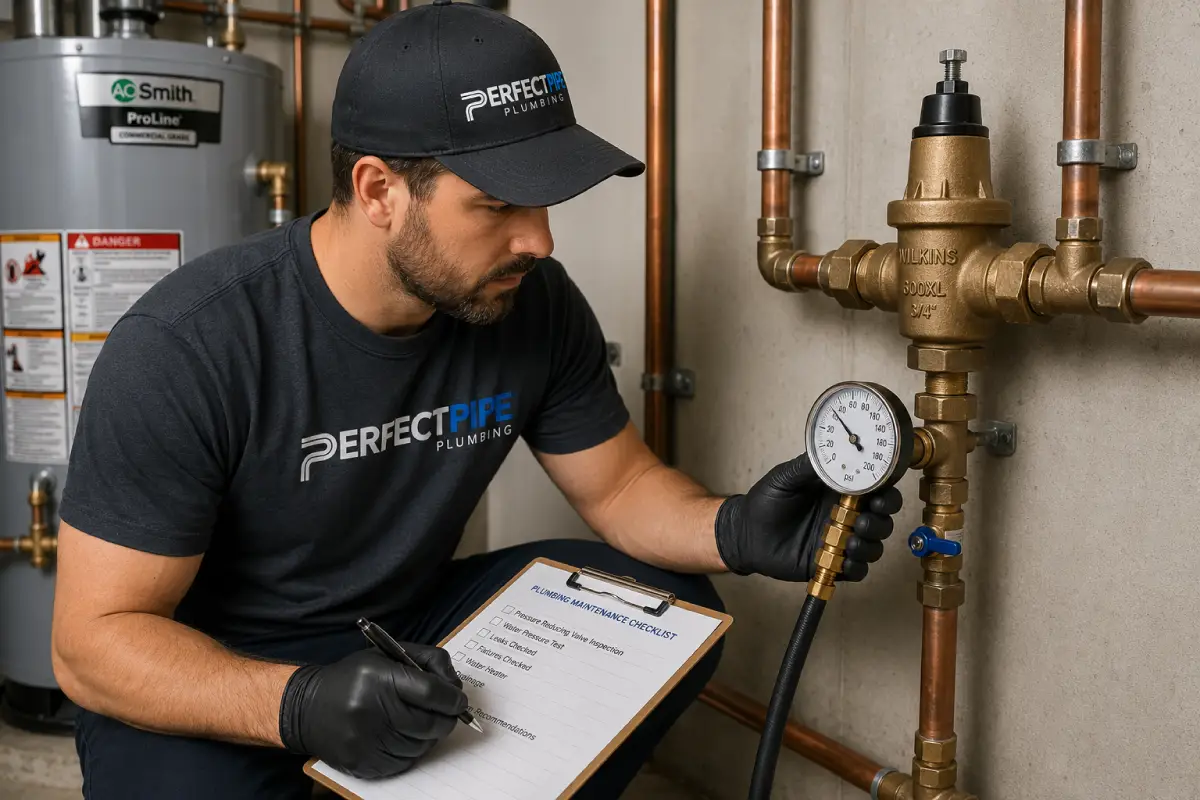
A licensed plumber can test your home’s water pressure and determine whether the valve is functioning correctly or should be replaced.
What Happens If You Don’t Replace a Failing PRV?
Ignoring a failing pressure reducing valve can allow excessive water pressure to place continuous stress on your plumbing system. While the damage may develop gradually, high pressure can shorten the lifespan of pipes, fixtures, appliances, and your water heater while increasing the likelihood of leaks.
Replacing a worn PRV before it fails completely is often far less expensive than repairing the plumbing damage that excessive water pressure can cause over time.
- Premature faucet and fixture wear.
- Frequent plumbing leaks.
- Burst pipes.
- Water heater damage.
- Appliance failures.
- Higher water usage from pressure-related leaks.
- Costly water damage repairs.
How Can You Help Your PRV Last Longer?
Although every pressure reducing valve eventually wears out, a few simple maintenance practices can help maximize its service life. Periodically checking your home’s water pressure and addressing plumbing problems early helps reduce unnecessary stress on the valve.
- Have your home’s water pressure tested during routine plumbing inspections.
- Address sudden pressure changes promptly.
- Repair plumbing leaks before they worsen.
- Replace aging valves before complete failure occurs.
- Schedule periodic plumbing maintenance if your home has older plumbing.
Regular inspections can often identify a failing PRV before it causes damage elsewhere in the plumbing system.
When Should You Replace a Pressure Reducing Valve?
Most homeowners should consider replacing their pressure reducing valve once it reaches 10 to 15 years of age, especially if they’re beginning to notice inconsistent water pressure or other pressure-related plumbing issues.
Even if the valve hasn’t completely failed, replacing an aging PRV before problems develop can help protect your plumbing system and avoid emergency repairs caused by excessive water pressure.
If you’re unsure how old your PRV is, a licensed plumber can inspect the valve, test your home’s water pressure, and recommend whether replacement is appropriate.
Frequently Asked Questions About Pressure Reducing Valve Lifespan
Can a pressure reducing valve last longer than 15 years?
Yes. Some high-quality pressure reducing valves continue working beyond 15 years, particularly in homes with good water quality and moderate municipal water pressure. However, their performance should still be evaluated periodically as they age.
How do I know if my PRV needs replacing?
Common warning signs include fluctuating water pressure, unusually high water pressure, dripping faucets, water hammer, recurring plumbing leaks, and water heater pressure relief valve discharge. A professional pressure test can confirm whether the PRV is functioning properly.
Can high water pressure damage a new PRV?
A properly sized pressure reducing valve is designed to handle high incoming municipal water pressure. However, poor water quality, excessive sediment, or improper installation can shorten its lifespan.
Should I replace my PRV before it fails?
In many cases, yes. Replacing an aging pressure reducing valve before it fails completely can help prevent plumbing damage, improve pressure consistency, and reduce the risk of expensive repairs.
Final Thoughts
A pressure reducing valve is a long-lasting plumbing component, but it isn’t designed to last forever. Most PRVs provide reliable performance for 10 to 15 years before normal wear begins affecting their ability to regulate water pressure effectively.
If your home is experiencing fluctuating water pressure, recurring plumbing leaks, water hammer, or other pressure-related issues, having your PRV professionally inspected can help identify problems before they lead to costly repairs.
At Perfect Pipe Plumbing, we provide professional pressure reducing valve inspections, testing, installation, and replacement services to help homeowners maintain safe, consistent water pressure and protect their plumbing systems for years to come.