A pressure reducing valve (PRV) plays an important role in protecting your home’s plumbing system by regulating the water pressure entering from the municipal water supply. Although a PRV operates automatically, it isn’t a “set it and forget it” component. Periodic inspections and basic maintenance can help ensure it continues regulating pressure properly while reducing unnecessary wear on your pipes, fixtures, appliances, and water heater.
Fortunately, maintaining a pressure reducing valve doesn’t require extensive upkeep. Understanding what to look for, how often it should be inspected, and the warning signs of a failing valve can help homeowners identify problems early and avoid costly plumbing repairs.
Do Pressure Reducing Valves Require Maintenance?
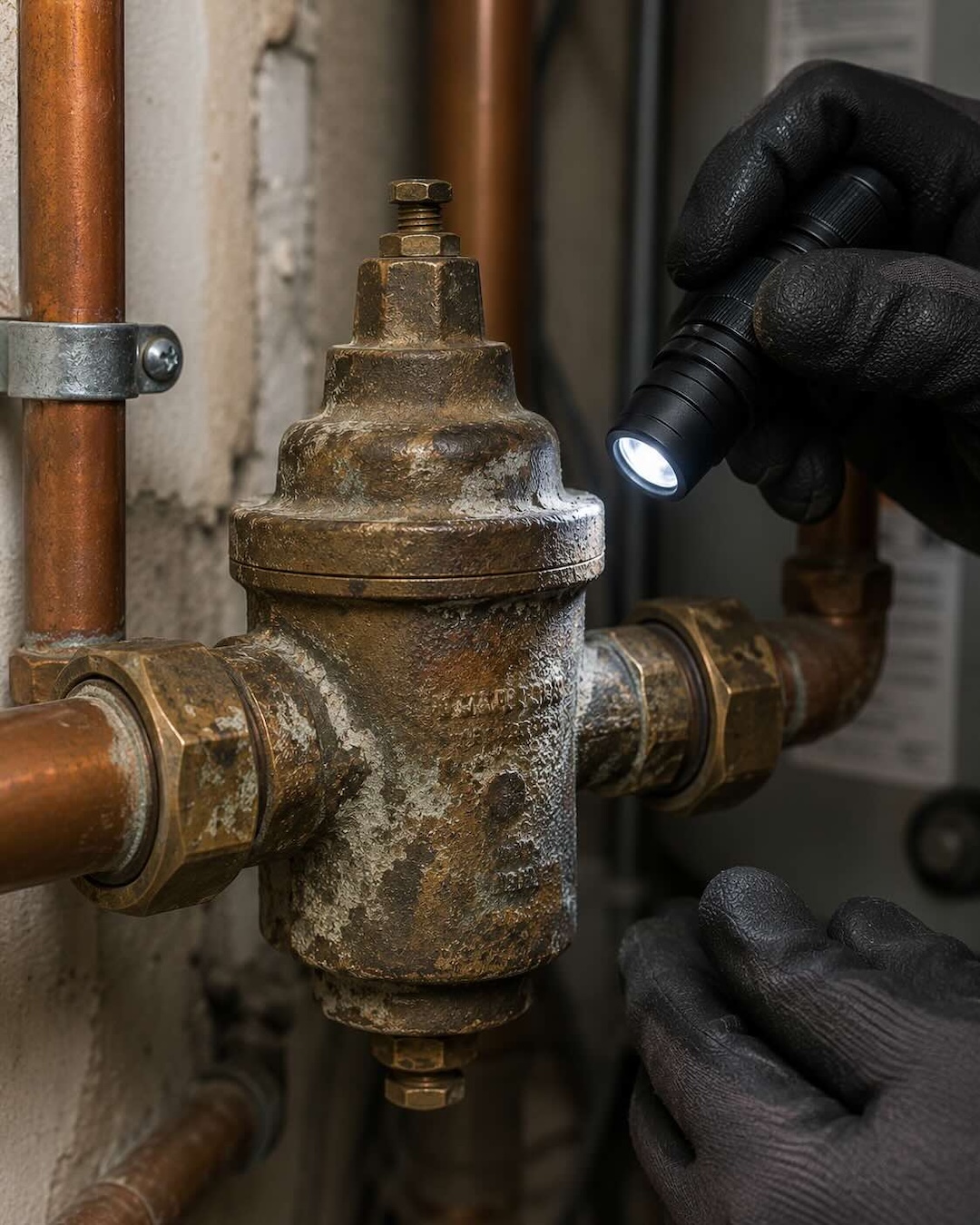
Yes. While pressure reducing valves are designed to operate for many years with minimal attention, they should still be inspected as part of routine plumbing maintenance. Internal components such as springs, diaphragms, and seals naturally wear over time, while mineral deposits from hard water can gradually affect the valve’s performance.
Most homeowners won’t need to perform extensive maintenance themselves, but periodic inspections can help verify that the valve is maintaining consistent water pressure and showing no signs of leakage or deterioration.
Routine Maintenance Helps:
- Maintain consistent household water pressure.
- Reduce unnecessary stress on plumbing fixtures.
- Protect water heaters and household appliances.
- Identify developing problems before failure occurs.
- Extend the service life of the valve.
How Often Should a Pressure Reducing Valve Be Inspected?
For most homes, a pressure reducing valve should be visually inspected during an annual plumbing maintenance visit. Homes with hard water, consistently high municipal water pressure, or older plumbing systems may benefit from more frequent evaluations.
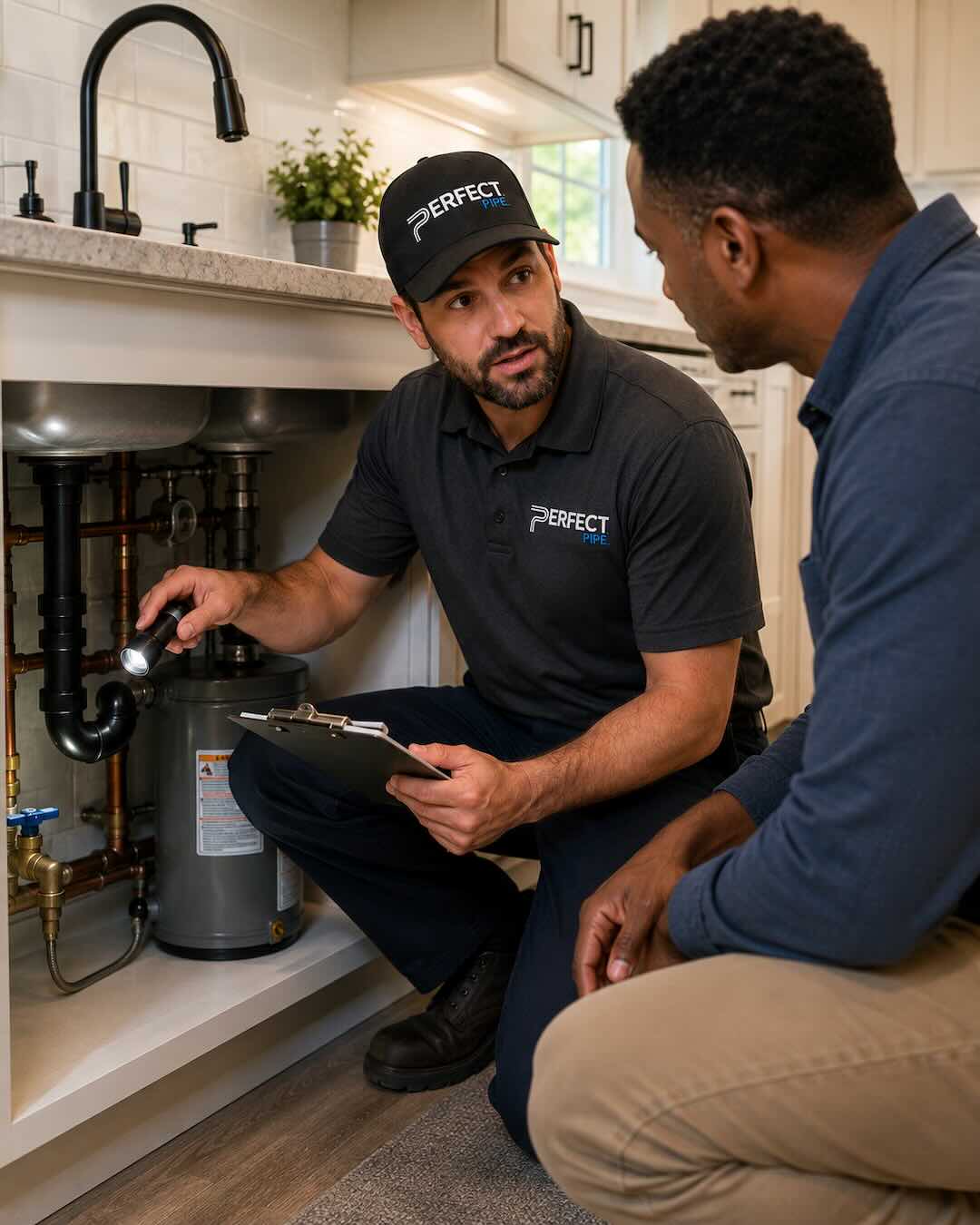
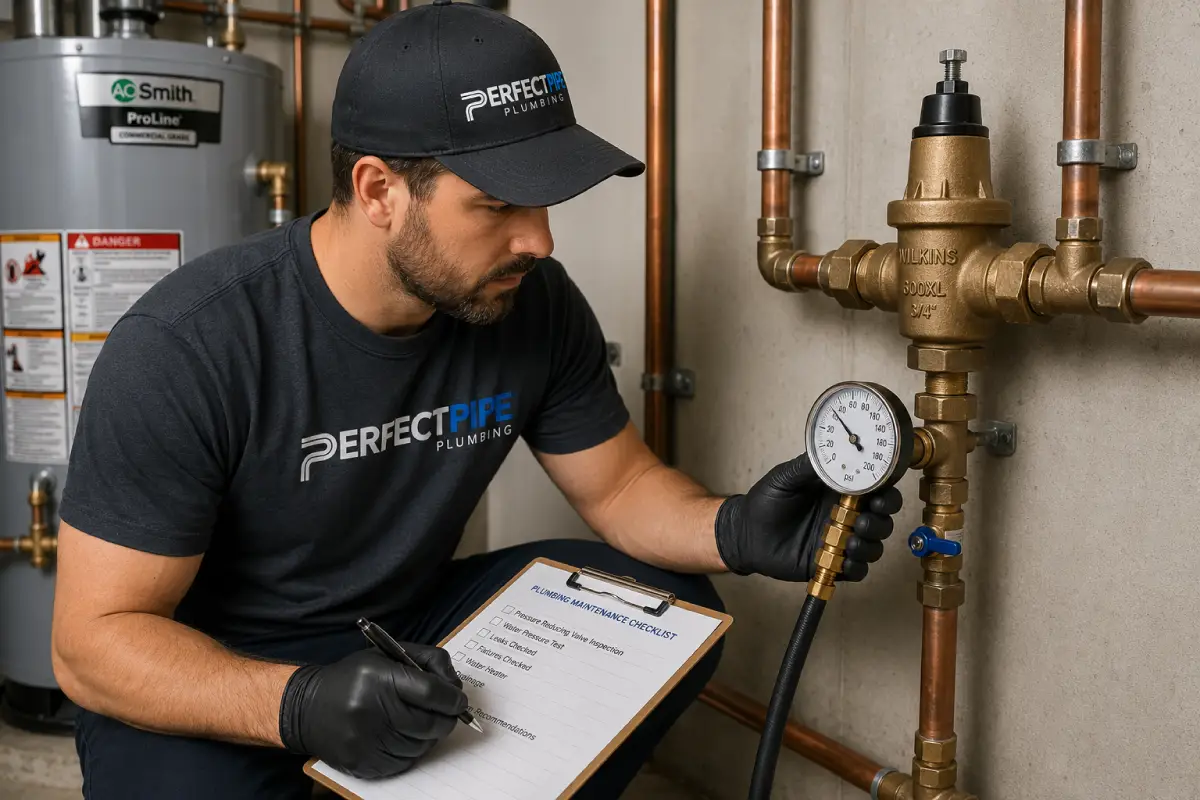
An inspection doesn’t necessarily involve disassembling the valve. Instead, a plumber typically checks the valve’s condition, verifies household water pressure, looks for visible leaks, and evaluates whether the regulator is still maintaining a consistent pressure throughout the home.
Situations That May Require More Frequent Inspections
- Your home has hard water.
- The plumbing system is more than 20 years old.
- You’ve experienced recent water pressure changes.
- The PRV is approaching the end of its expected lifespan.
- Your home has experienced previous pressure-related plumbing issues.
What Maintenance Can Homeowners Perform?
Unlike many plumbing fixtures, a pressure reducing valve contains sealed internal components that generally aren’t intended for routine homeowner servicing. However, there are several simple observations homeowners can make that may identify developing problems before they become serious.
Things You Can Check Yourself
- Look for water leaking around the valve body.
- Listen for unusual pipe noises when fixtures are used.
- Pay attention to changes in water pressure.
- Watch for new faucet or toilet leaks developing throughout the home.
- Monitor your water bill for unexplained increases.
These observations won’t diagnose every problem, but they can provide valuable clues that the valve should be professionally inspected.
Can a Pressure Reducing Valve Be Cleaned?
Mineral deposits can sometimes accumulate around the exterior of a pressure reducing valve or within nearby plumbing components, particularly in areas with hard water. Keeping the surrounding area clean makes it easier to spot leaks and inspect the valve during routine maintenance.
However, homeowners should avoid disassembling the valve to clean its internal components. Because the valve is calibrated to regulate water pressure precisely, improper disassembly or reassembly can affect its performance or damage internal parts.
If mineral buildup is affecting the valve’s operation, professional servicing or replacement is usually the safest and most reliable solution.
Signs Your Pressure Reducing Valve Needs Professional Attention
Even with routine inspections, every pressure reducing valve (PRV) will eventually wear out. Springs lose tension, diaphragms deteriorate, and internal components can become affected by years of water flow and mineral deposits. Recognizing the warning signs early allows homeowners to address problems before excessive water pressure begins damaging the rest of the plumbing system.
While a single symptom doesn’t always mean the PRV has failed, experiencing multiple pressure-related issues at the same time is often a strong indication that the valve should be professionally evaluated.
Common Warning Signs
- Water pressure suddenly becomes much stronger than normal.
- Water pressure drops noticeably throughout the home.
- Pressure fluctuates between strong and weak.
- Pipes bang or make loud noises when fixtures are turned off.
- Faucets begin dripping unexpectedly.
- Toilets require more frequent repairs.
- The PRV is leaking externally.
- Your home has experienced multiple pressure-related plumbing issues.
If several of these symptoms appear together, the pressure reducing valve should be inspected before additional plumbing components begin to fail.
Can a Pressure Reducing Valve Be Adjusted?
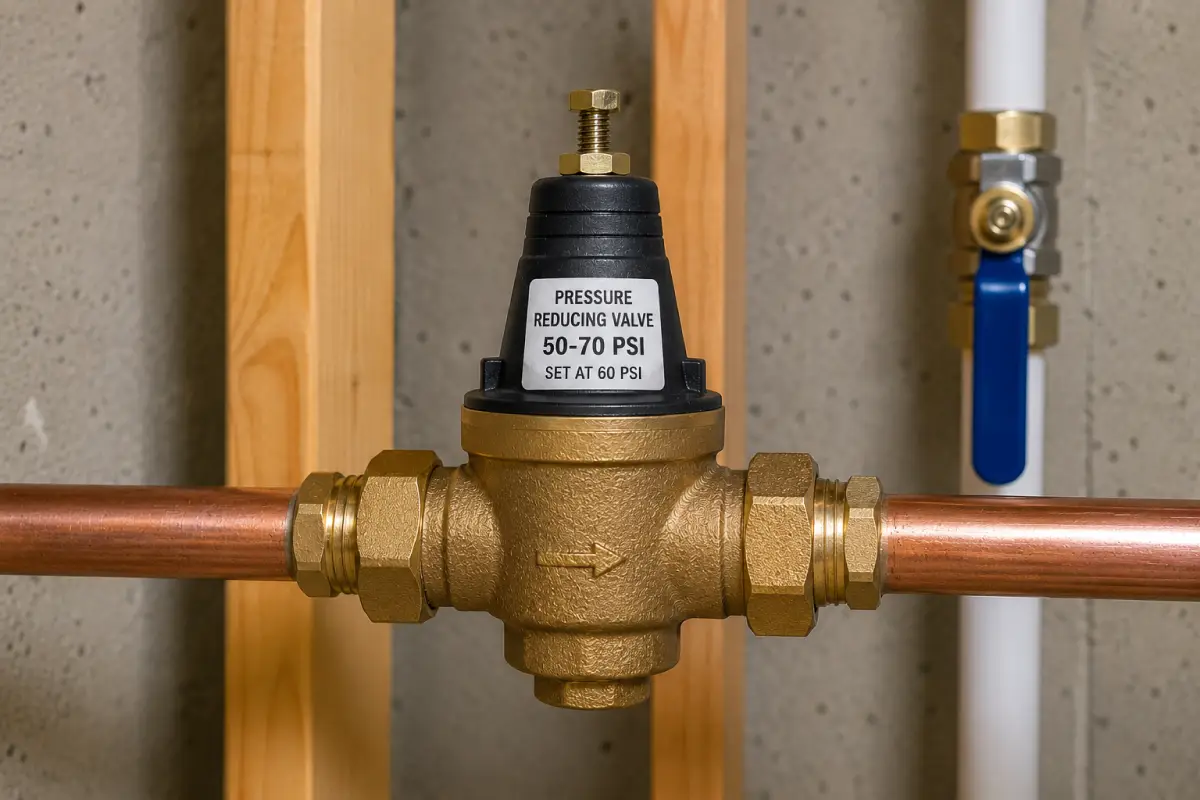
Most residential pressure reducing valves include an adjustment screw that allows a plumber to fine-tune the outlet pressure. However, adjusting the valve without first measuring the home’s water pressure can actually create additional plumbing problems.
A proper adjustment begins by connecting a pressure gauge to the plumbing system to determine the existing water pressure. If the pressure falls outside the recommended range, small adjustments can then be made while monitoring the results. Simply turning the adjustment screw without testing the pressure can leave the home operating with pressure that is either too high or too low.
In some cases, a valve that no longer responds to adjustments has reached the end of its service life and should be replaced rather than continually readjusted.
When Maintenance Is No Longer Enough
Routine maintenance can help maximize the lifespan of a pressure reducing valve, but it cannot prevent normal wear forever. Like any mechanical plumbing component, every PRV will eventually require replacement after years of regulating household water pressure.
If the valve continues causing inconsistent pressure, leaks externally, or no longer maintains the proper outlet pressure despite adjustment, replacement is usually the most reliable long-term solution.
| Condition | Recommended Action |
|---|---|
| Normal operation with consistent pressure | Continue annual inspections. |
| Minor pressure adjustment needed | Test and adjust the existing PRV. |
| Pressure continues fluctuating after adjustment | Schedule a professional inspection. |
| Visible leak from the valve body | Replace the pressure reducing valve. |
| Valve no longer regulates pressure properly | Replace the pressure reducing valve. |
Replacing a worn PRV before it fails completely can help prevent unnecessary wear on pipes, plumbing fixtures, appliances, and your water heater while restoring consistent water pressure throughout the home.
Simple Tips to Extend the Life of Your Pressure Reducing Valve
Although no pressure reducing valve lasts forever, following a few simple maintenance practices can help maximize its service life and improve the overall reliability of your plumbing system.
Best Practices
- Schedule routine plumbing inspections.
- Address changes in water pressure promptly.
- Repair plumbing leaks before they become more serious.
- Keep the area around the valve accessible for inspection.
- Monitor your home’s water pressure periodically.
- Replace the valve when it reaches the end of its useful life.
These simple habits can help identify developing problems early while reducing the likelihood of expensive plumbing repairs caused by excessive water pressure.
What Affects Plumbing Repair Costs? (General: Pipes, Leaks, Drains)Final Thoughts
Maintaining a pressure reducing valve doesn’t require constant attention, but regular inspections play an important role in protecting your home’s plumbing system. By monitoring water pressure, watching for leaks, and recognizing early warning signs, homeowners can often identify developing problems before they lead to costly plumbing repairs.
If you’ve noticed fluctuating water pressure, unusually high water pressure, recurring plumbing leaks, or signs that your pressure reducing valve may no longer be functioning properly, having the system professionally inspected can help determine whether a simple adjustment, maintenance, or replacement is the best solution.
At Perfect Pipe Plumbing, we provide professional pressure reducing valve inspections, maintenance, and replacement to help homeowners maintain safe, consistent water pressure while protecting their plumbing systems for years to come.