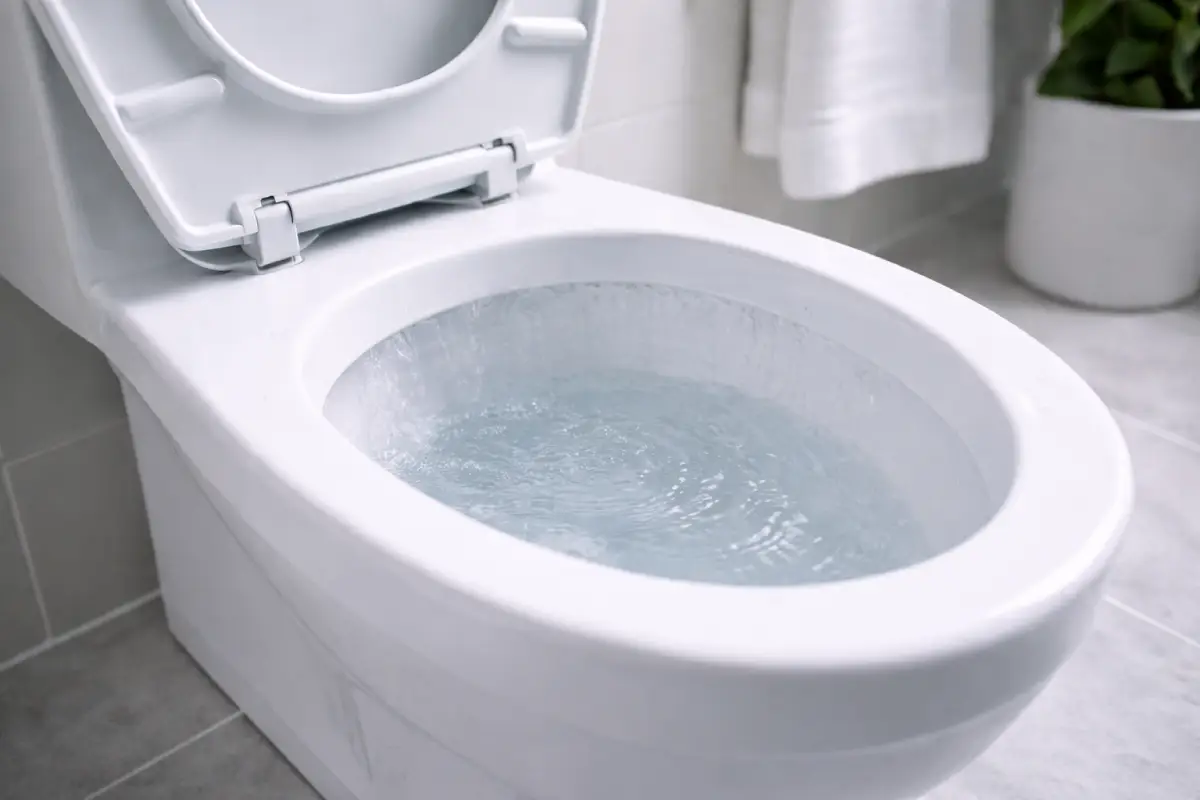
A toilet that keeps running usually means that water is continuously flowing from the tank into the bowl. While this may not seem urgent at first, it can waste hundreds of gallons of water over time.
The good news is that most running toilet issues are caused by a few common components inside the tank. Understanding these causes can help you determine whether it is a quick adjustment or a problem that needs professional repair.
1. A worn or misaligned flapper
The flapper is a rubber valve at the bottom of the tank that controls the flow of water into the bowl. If it becomes worn, warped, or slightly misaligned, it may fail to seal properly.
When this happens, water slowly leaks into the bowl, causing the tank to constantly refill. This is one of the most common causes of a running toilet.
In some cases, adjusting or replacing the flapper can solve the issue quickly.
2. The float is set too high
The float controls how much water fills the tank. If it is set too high, water can rise above the proper level and begin flowing into the overflow tube.
This creates a situation where the toilet is constantly refilling even though it appears to be working normally.
Lowering the float to the correct level can often stop the running and restore normal operation.
3. A faulty fill valve
The fill valve controls how water enters the tank after each flush. If it becomes worn or damaged, it may fail to shut off completely.
This can cause water to continue flowing into the tank, leading to a constant running sound. Over time, a faulty fill valve can reduce efficiency and increase water usage.
Replacing the fill valve is often a straightforward repair that can resolve the problem.
4. The chain is too tight or too loose
The chain connects the flush handle to the flapper. If it is too tight, it can prevent the flapper from closing fully. If it is too loose, it may not allow the flapper to seal properly after flushing.
Either situation can result in continuous water flow from the tank to the bowl.
Adjusting the chain length so the flapper closes completely can often fix the issue.
5. Problems with the overflow tube
The overflow tube prevents the tank from overfilling by directing excess water into the bowl. If water is constantly flowing into this tube, it usually means the tank water level is set too high or another component is malfunctioning.
This can create a cycle where the toilet never fully stops running.
Checking the water level and adjusting the float or fill valve can help correct this problem.
Why you should not ignore a running toilet
A running toilet may seem like a small annoyance, but it can waste a significant amount of water. In some cases, a single toilet can use hundreds of extra gallons per day if the issue is not addressed.
This not only increases your water bill but can also put unnecessary strain on your plumbing system over time.
Simple checks you can try
If your toilet keeps running, there are a few quick things you can look at before calling a professional:
- Check if the flapper is sealing properly
- Make sure the float is not set too high
- Inspect the chain for proper length
- Listen for water flowing into the overflow tube
These simple checks can sometimes resolve the issue or help you better understand what is going wrong.
When to call a plumber
If you have tried basic adjustments and your toilet continues to run, it may be time for a professional inspection. Worn components, internal damage, or more complex issues may require expert repair.
Addressing the problem early can help prevent wasted water and avoid more serious plumbing issues down the line.
Final Thoughts
A running toilet is usually caused by a simple internal issue, but it is not something you should ignore. Small components like the flapper, float, or fill valve can have a big impact on performance.
Taking the time to identify the cause can help you restore proper function and avoid unnecessary water waste. If the problem persists, having it inspected can ensure your toilet is working efficiently again.