What goes down your drain matters more than most people realize. Many common household items can build up inside your pipes and lead to slow drains, clogs, or even serious backups.
Some of these items may seem harmless at first, but over time they can create stubborn blockages that require professional attention. Avoiding these common mistakes can help keep your plumbing system running smoothly and prevent costly repairs.
1. Grease, fats, and cooking oil
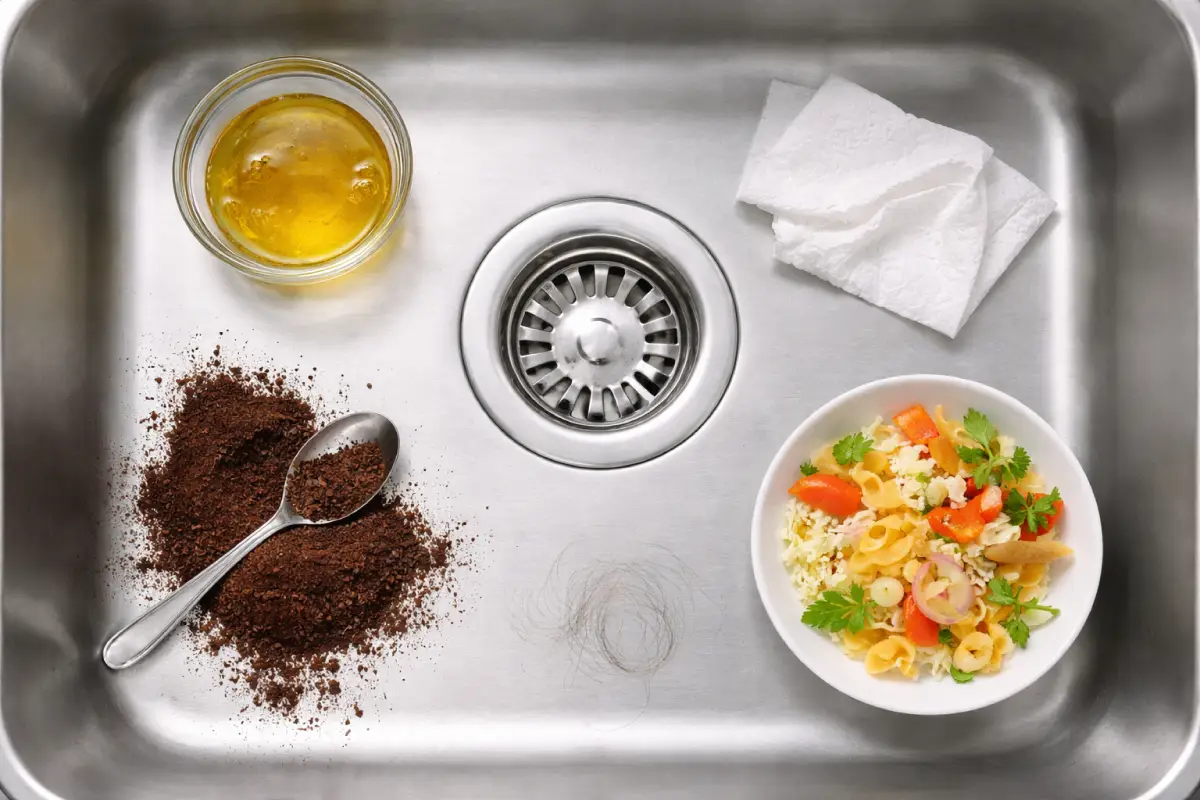
One of the most common causes of drain clogs is pouring grease or cooking oil down the sink. While it may go down as a liquid, it quickly cools and hardens inside your pipes.
Over time, grease can stick to the walls of your plumbing and trap other debris, creating thick blockages that restrict water flow. Even small amounts can build up and lead to major issues.
Instead of pouring grease down the drain, allow it to cool and dispose of it properly in the trash.
2. Coffee grounds
Coffee grounds may seem harmless, but they do not break down easily in water. Instead, they tend to clump together and settle inside your pipes.
When combined with grease or other debris, coffee grounds can form a dense blockage that is difficult to clear. This can lead to slow drains and recurring clogs.
It is better to dispose of coffee grounds in the trash or compost rather than rinsing them down the sink.
3. Food scraps (even with a garbage disposal)
Garbage disposals can handle small food particles, but that does not mean everything should go down the drain. Items like pasta, rice, and bread can expand when exposed to water, creating thick, sticky buildup.
Fibrous foods like celery or corn husks can also wrap around disposal blades and interfere with proper operation.
Using your disposal properly and avoiding problematic foods can help prevent unnecessary strain on your plumbing system.
4. “Flushable” wipes and paper products
Despite the label, many “flushable” wipes do not break down like toilet paper. These materials can collect in pipes and sewer lines, leading to serious clogs and backups.
Other paper products like paper towels and napkins are also too thick to dissolve properly and can accumulate over time.
To avoid blockages, only flush toilet paper and dispose of other products in the trash.
5. Hair and soap buildup
Hair is a major contributor to clogged bathroom drains. It can tangle and bind with soap residue, forming stubborn clumps that block water flow.
Soap can also leave behind a film that builds up along pipe walls, making it easier for debris to stick and reduce drainage efficiency.
Using drain covers and regularly cleaning them can help minimize this type of buildup.
Why avoiding these items matters
Keeping these materials out of your drains can help prevent slow drainage, unpleasant odors, and major plumbing issues. Many clogs develop gradually, and by the time they become noticeable, the blockage may already be severe.
Simple habits can go a long way in protecting your plumbing system and reducing the need for repairs.
When to call a professional
If you are dealing with recurring clogs, slow drains, or backups, it may be time to have your system inspected. A professional can identify the cause of the problem and recommend the best solution before it leads to more serious damage.
Addressing drain issues early can help restore proper flow and prevent costly repairs down the line.