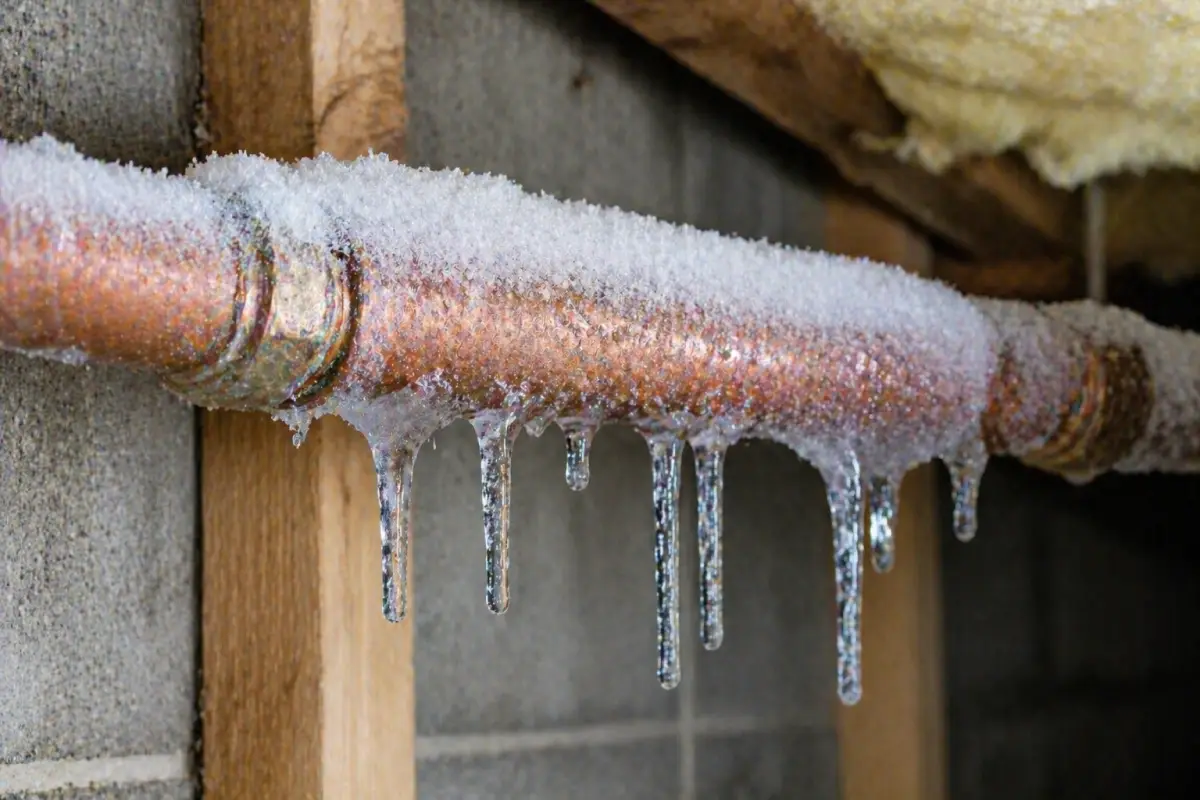
Frozen pipes can quickly become a serious issue if they are not addressed properly. As water freezes, it expands and puts pressure on the pipe, increasing the risk of a burst.
Taking the right steps as soon as you notice a problem can help prevent damage and restore water flow safely.
1. Turn off the water supply
If you suspect a pipe is frozen, shutting off the water supply can help prevent pressure buildup and reduce the risk of a burst if the pipe cracks.
Knowing where your main shutoff valve is located can make a big difference in an emergency.
2. Locate the frozen section
Frozen pipes are often found in unheated areas such as basements, crawl spaces, garages, or exterior walls. Look for sections of pipe that feel extremely cold or have visible frost.
Identifying the frozen area helps you apply heat safely and effectively.
3. Apply gentle heat
Slowly warming the pipe is the safest way to thaw it. Use gentle heat sources and apply warmth gradually to avoid damaging the pipe.
Safe ways to thaw pipes
- Use a hair dryer on a low setting
- Apply warm towels around the pipe
- Use a space heater in the area (safely and at a distance)
Start thawing near the faucet end and work your way back toward the frozen section.
4. Keep the faucet open
Opening the faucet allows water to flow as the ice melts. This helps relieve pressure inside the pipe and reduces the risk of a burst.
You may begin to see a small trickle of water as the pipe starts to thaw.
5. Check for leaks after thawing
Once the pipe has thawed, inspect it carefully for cracks or leaks. Even a small fracture can lead to a larger problem if left unaddressed.
Monitor the area for dripping water or damp spots.
What not to do
Using the wrong method to thaw pipes can cause damage or create safety risks.
- Do not use open flames or torches
- Avoid applying extreme heat too quickly
- Do not ignore the problem and wait for it to thaw on its own
How to prevent pipes from freezing
Taking preventative steps can help reduce the risk of frozen pipes during cold weather.
Prevention tips
- Insulate exposed pipes
- Keep cabinets open to allow warm air to circulate
- Let faucets drip during extreme cold
- Maintain consistent indoor temperatures
When to call a professional
If you cannot locate the frozen section or the pipe is inaccessible, it is best to have the issue handled professionally. If a pipe has already cracked or burst, immediate repair is necessary.
Final Thoughts
Frozen pipes can lead to serious damage if not handled properly. Acting quickly and using safe thawing methods can help prevent a burst and protect your home.
Taking preventative steps during cold weather is the best way to avoid future issues.