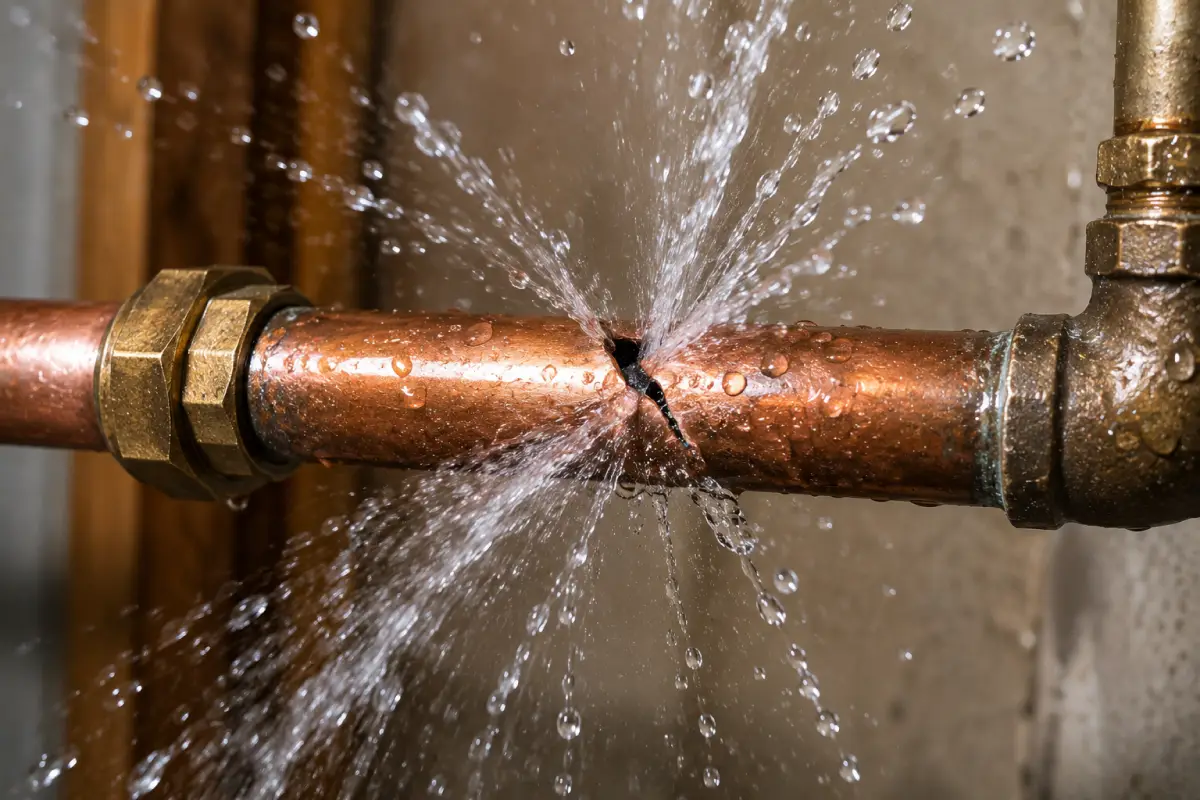
A burst pipe is one of the most damaging plumbing emergencies a homeowner can face. Even a small crack can release a large amount of water in a short period of time, leading to costly repairs, property damage, and disruption to daily life. While many people associate burst pipes with winter weather, there are several other factors that can weaken plumbing and increase the risk of failure.
Understanding what causes pipes to burst can help you recognize warning signs early and take steps to protect your home before a plumbing emergency occurs.
Why pipes burst
Pipes typically burst when internal pressure exceeds what the pipe material can safely handle. This pressure may result from freezing water, corrosion, blockages, excessive water pressure, or physical damage to the pipe itself.
In many cases, pipes weaken gradually over time before eventually failing at their most vulnerable point.
1. Freezing temperatures
Frozen pipes are one of the most well-known causes of burst plumbing lines. When water freezes, it expands. As ice forms inside a pipe, pressure builds between the blockage and the closed fixture. Eventually, the pressure can become strong enough to crack or burst the pipe.
Pipes located in unheated areas such as crawl spaces, garages, basements, attics, and exterior walls are especially vulnerable during cold weather.
2. Pipe corrosion
Over time, certain pipe materials can corrode from the inside out. Corrosion gradually weakens the pipe wall, making it more susceptible to leaks and eventual failure.
Older galvanized steel pipes are particularly prone to corrosion, but other materials can also deteriorate depending on water quality and environmental conditions.
3. Excessive water pressure
Water pressure that is consistently too high places additional stress on pipes, fittings, valves, and appliances. While strong water pressure may seem desirable, excessive pressure can gradually weaken plumbing components and increase the likelihood of a burst pipe.
Sudden pressure surges, sometimes referred to as water hammer, can be especially damaging over time.
4. Aging plumbing systems
Like any component of a home, plumbing materials have a finite lifespan. As pipes age, they become more vulnerable to corrosion, wear, mineral buildup, and structural weakening.
Homes with older plumbing systems may experience a higher risk of leaks and pipe failures, particularly if maintenance and repairs have been deferred.
5. Clogs and blockages
Severe blockages can increase pressure within the plumbing system. When water cannot flow normally through a pipe, pressure may build behind the obstruction and place additional strain on weakened sections of the line.
While clogs alone do not typically cause pipes to burst, they can contribute to failures when combined with other factors.
6. Shifting soil and foundation movement
Underground water lines and plumbing systems can be affected by soil movement, settling foundations, and changing ground conditions. As the ground shifts, stress can be placed on buried pipes and connections.
Over time, this movement can create cracks, leaks, or complete pipe failures.
7. Tree root intrusion
Tree roots naturally seek out sources of moisture and can grow toward underground plumbing lines. As roots expand around or into damaged pipes, they can create additional pressure and structural damage.
This is a common issue with older underground piping systems.
Warning signs a pipe may be close to failing
Pipes often show warning signs before they burst completely. Recognizing these indicators early may allow homeowners to address the issue before significant damage occurs.
- Recurring leaks in the same area
- Unexplained drops in water pressure
- Discolored or rusty water
- Visible corrosion on exposed pipes
- Unusually high water bills
- Damp spots on walls, ceilings, or floors
How to reduce the risk of burst pipes
Preventative maintenance can significantly reduce the likelihood of pipe failures. Insulating vulnerable pipes, monitoring water pressure, repairing leaks promptly, and scheduling inspections for aging plumbing systems can all help protect your home.
Addressing small issues before they worsen is often far less expensive than repairing water damage after a burst pipe.
Final Thoughts
Burst pipes can result from a variety of factors, including freezing temperatures, corrosion, high water pressure, aging plumbing, and underground pipe damage. Understanding these causes can help homeowners take proactive steps to protect their plumbing systems and avoid costly emergencies.
Regular inspections and prompt repairs remain some of the most effective ways to reduce the risk of a pipe failure.