Choosing between a tank and tankless water heater can impact your home’s comfort, energy efficiency, and long-term costs. While both systems provide hot water, they operate in very different ways and are suited for different household needs.
Understanding how each system works, along with the pros, cons, and cost considerations, can help you make a more confident decision. The right choice depends on factors like usage, home size, and long-term goals rather than a one-size-fits-all answer.
How tank water heaters work
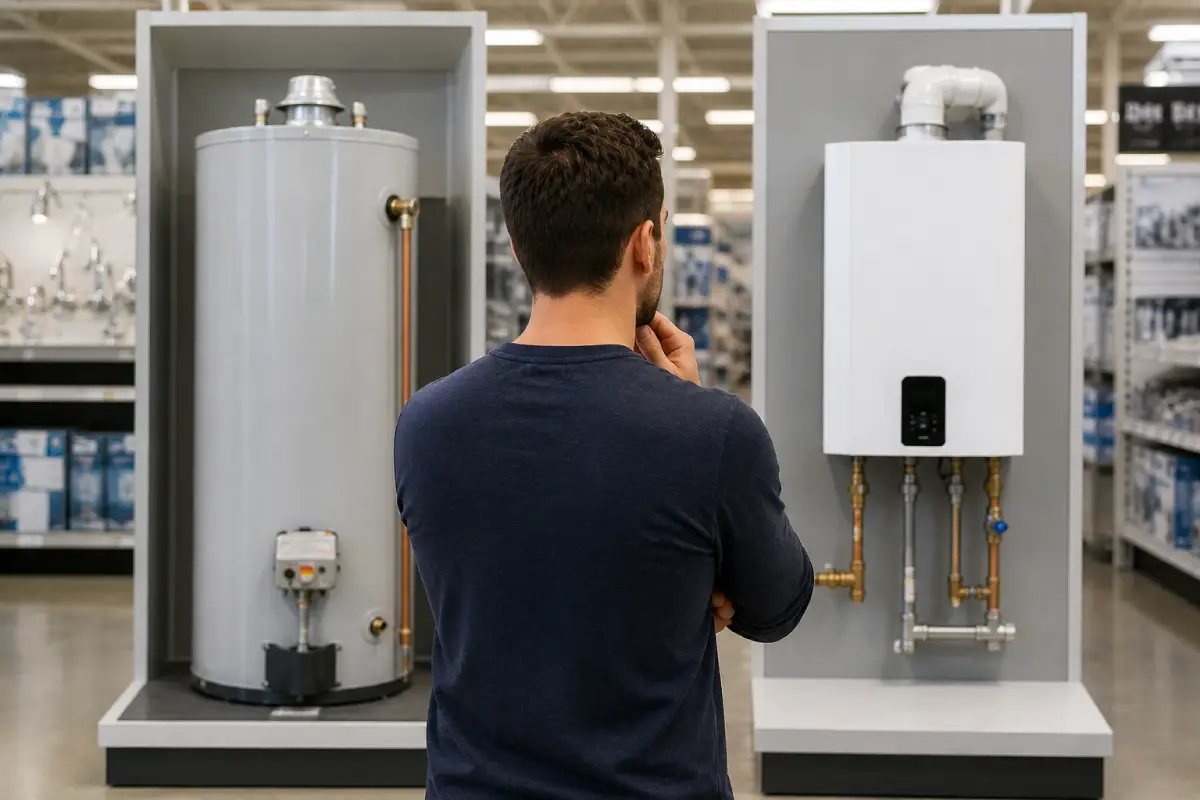
Tank water heaters store a set amount of heated water in a large insulated tank, typically ranging from 30 to 80 gallons depending on the size of the home. The system keeps this water heated at all times so it is ready for use when needed.
When hot water is used, the tank refills with cold water and reheats it to maintain the set temperature. While this setup is reliable and widely used, the main limitation is that once the tank is emptied, you must wait for it to refill and reheat before hot water is available again.
How tankless water heaters work
Tankless water heaters, also known as on-demand systems, heat water only when it is needed instead of storing it. When a hot water tap is turned on, cold water flows through the unit and is rapidly heated by gas burners or electric elements.
Because there is no storage tank, these systems can provide a continuous supply of hot water. However, output is limited by the unit’s capacity, which means multiple fixtures running at the same time can reduce performance if the system is undersized.
Tank vs tankless: key differences explained
Hot water availability
Tank systems provide a limited amount of hot water based on tank size, which can be a drawback for larger households or high-demand usage. Tankless systems eliminate this limitation by heating water on demand, but they must be properly sized to handle simultaneous use across multiple fixtures.
Energy efficiency
Tankless water heaters are generally more energy-efficient because they only heat water when needed. Tank systems, on the other hand, continuously maintain the temperature of stored water, which can lead to standby heat loss over time.
Installation and space
Tank water heaters require more physical space due to their size and are typically installed in basements, garages, or utility rooms. Tankless systems are compact and can be mounted on a wall, making them ideal for homes with limited space or those looking for a more modern setup.
Lifespan and maintenance
Tank water heaters generally last 8 to 12 years, while tankless systems can last 15 to 20 years with proper maintenance. However, tankless units may require more consistent maintenance, especially in areas with hard water.
Cost comparison: upfront vs long-term
One of the biggest differences between tank and tankless water heaters is the cost structure. Tank systems are typically more affordable upfront, making them a popular choice for homeowners looking for a lower initial investment.
Tankless systems often have a higher installation cost due to the unit price and potential upgrades to gas lines or electrical systems. However, their improved energy efficiency can reduce operating costs over time, especially in homes with consistent hot water usage.
When comparing costs, it is important to look beyond the initial price and consider long-term energy savings, maintenance, and system lifespan.
Pros and cons of tank water heaters
Advantages
- Lower upfront cost and simpler installation
- Reliable performance for typical household use
- Lower initial investment compared to tankless systems
Disadvantages
- Limited hot water supply based on tank size
- Higher energy usage due to constant heating
- Larger space requirements
Pros and cons of tankless water heaters
Advantages
- Continuous hot water without running out
- Improved energy efficiency over time
- Compact and space-saving design
- Longer lifespan with proper maintenance
Disadvantages
- Higher upfront cost and installation complexity
- May require system upgrades to install properly
- Limited output if multiple fixtures run simultaneously
Which water heater is better for your home
The best choice depends on how your household uses hot water. Homes with higher demand, larger families, or frequent simultaneous use may benefit from a properly sized tankless system. Smaller households or those looking for a more budget-friendly option may find a traditional tank system more practical.
It is also important to consider your long-term plans. If you plan to stay in your home for many years, the efficiency and lifespan of a tankless system may provide greater value over time. If you are looking for a quick and cost-effective replacement, a tank system may be the better choice.
When to consider upgrading your water heater
If your current water heater is struggling to keep up with demand, frequently needs repairs, or is nearing the end of its lifespan, it may be time to consider an upgrade. Comparing tank and tankless options at this stage can help you choose a system that better fits your current needs.
Evaluating efficiency, cost, and performance together ensures you are making a well-informed decision rather than simply replacing what you already have.
Final Thoughts
Tank and tankless water heaters both have their place depending on your home and usage. Understanding the differences in performance, cost, and efficiency allows you to choose the option that provides the best long-term value.
Taking the time to evaluate your needs now can help you avoid future limitations and ensure reliable hot water for years to come.