Gas line problems are uncommon, but they can quickly become dangerous if ignored. Recognizing the warning signs of a gas leak or damaged gas line can help protect your home, your family, and your property. Knowing when to leave the area and contact your gas utility or a licensed professional is critical.
This guide explains the most common warning signs of gas line problems, what causes them, and the steps you should take if you suspect a natural gas leak.
What Are the Warning Signs of a Gas Line Problem?
Natural gas is colorless and odorless, but utility companies add a sulfur-like odor to make leaks easier to detect. While the smell of rotten eggs is one of the most recognizable warning signs, it’s not the only indication that something may be wrong.
Some gas line problems develop gradually, while others occur suddenly due to corrosion, ground movement, excavation damage, or aging piping.
If you notice multiple warning signs at the same time, treat the situation as a potential gas emergency.
1. A Strong Rotten Egg Smell
The most common warning sign of a natural gas leak is a strong sulfur or rotten egg odor. This smell is intentionally added to natural gas so leaks can be detected before dangerous concentrations develop.
If the odor becomes stronger over time or is concentrated in one area of your home or yard, do not ignore it.
Leave the area immediately and contact your gas utility or emergency services from a safe location.
2. Hissing or Whistling Sounds
A damaged gas line may produce a hissing or whistling sound as natural gas escapes through a crack, loose fitting, or damaged pipe.
- Near gas appliances.
- Around exposed gas piping.
- Outside near the gas meter.
- Close to underground gas lines.
A loud hissing noise combined with the smell of gas should always be treated as an emergency.
3. Dead or Dying Vegetation
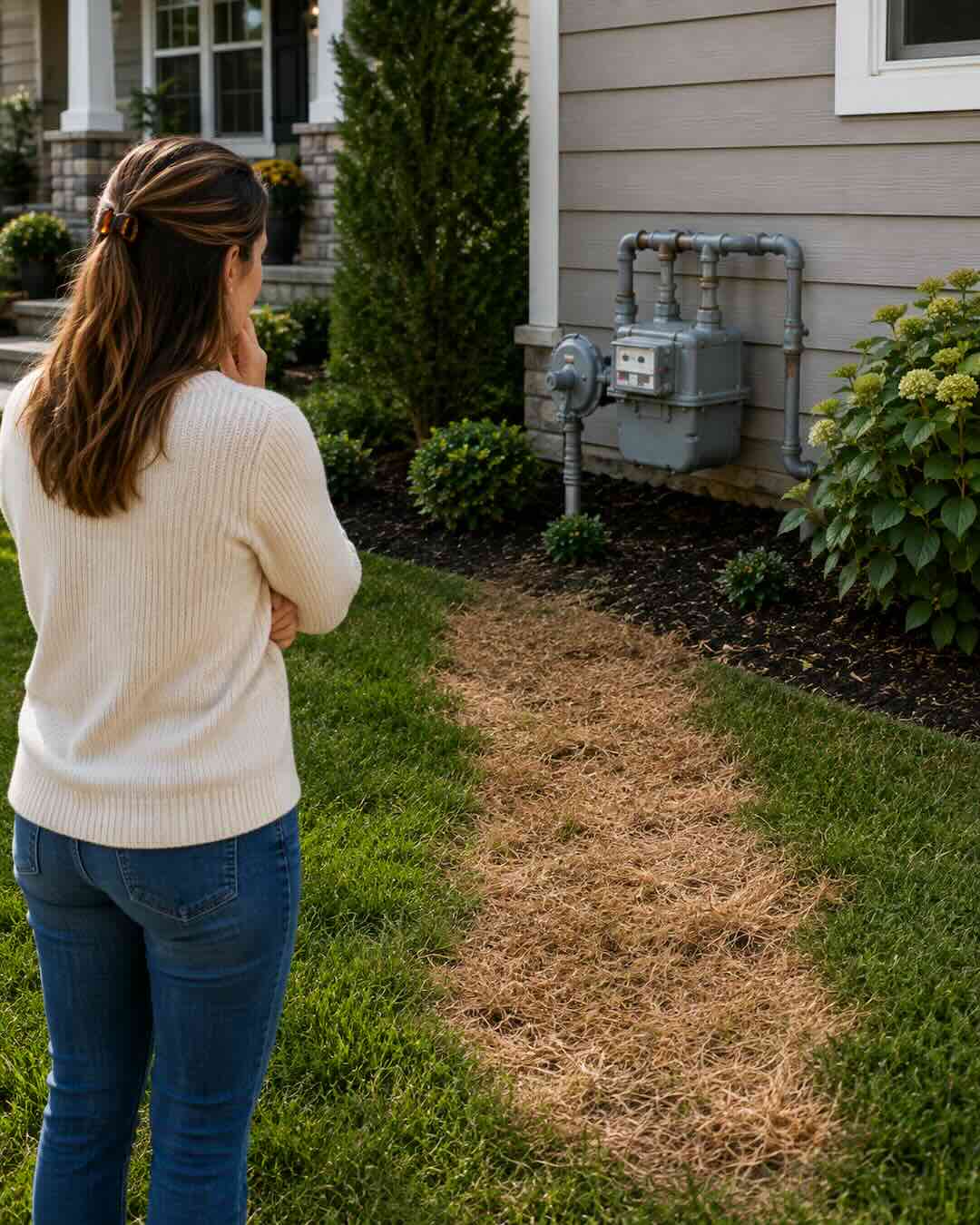
If an underground gas line develops a leak, escaping natural gas can displace oxygen in the soil. As a result, grass, shrubs, or other vegetation directly above the leak may suddenly turn brown or die while nearby plants remain healthy.
While dead vegetation can have many causes, an isolated patch of dying grass near a buried gas line should never be ignored.
4. Physical Symptoms Inside the Home
Exposure to natural gas can cause symptoms that may initially resemble fatigue or illness. If multiple people experience similar symptoms while inside the home, evacuate immediately and seek fresh air.
- Headaches.
- Dizziness.
- Nausea.
- Fatigue.
- Difficulty breathing.
If symptoms improve after leaving the building, do not re-enter until the property has been declared safe by the appropriate authorities.
5. Unusually High Gas Bills
If your natural gas usage hasn’t changed but your monthly bill suddenly increases, it may indicate that gas is escaping somewhere in the system. While higher utility bills can have several causes, unexplained increases should be investigated.
A licensed professional can inspect your gas piping and appliances to determine whether a leak or other issue is affecting your system.
6. Pilot Lights That Frequently Go Out
If the pilot light on a gas water heater, furnace, or other gas appliance repeatedly goes out without explanation, it could indicate an issue with the gas supply or appliance. While several mechanical problems can cause this symptom, it should never be ignored.
If multiple gas appliances begin behaving unusually at the same time, have the system inspected promptly.
What Should You Do If You Suspect a Gas Leak?
If you believe you have a gas leak, your safety should be the top priority. Do not attempt to locate the leak yourself or make repairs.
- Leave the building immediately.
- Warn everyone inside to evacuate.
- Avoid using light switches, electrical devices, or phones inside the home.
- Do not start vehicles or equipment near the suspected leak.
- Call your gas utility or 911 from a safe location.
- Do not return until emergency personnel determine it is safe.
Even if the odor seems to disappear, continue treating the situation as a potential gas leak until professionals have inspected the property.
What Causes Residential Gas Line Problems?
Although modern gas lines are designed to provide decades of reliable service, they can still become damaged over time due to age, environmental conditions, or accidental impacts.
- Corrosion.
- Ground movement or soil shifting.
- Excavation damage.
- Loose fittings or aging connections.
- Improper installation.
- Normal wear over many years.
Routine inspections and prompt repairs can help reduce the likelihood of unexpected gas line failures.
Frequently Asked Questions About Gas Line Problems
What does a natural gas leak smell like?
Natural gas is treated with an odorant that smells similar to rotten eggs or sulfur, making leaks easier to detect before they become dangerous.
Can a small gas leak become dangerous?
Yes. Even a small leak should be taken seriously because gas can accumulate over time and create hazardous conditions. Never ignore the smell of natural gas.
Should I try to find the source of a gas leak?
No. If you suspect a gas leak, leave the area immediately and contact your gas utility or emergency services from a safe location. Do not attempt to locate or repair the leak yourself.
Who should I call if I smell natural gas?
Leave the building first, then contact your gas utility’s emergency line or call 911 from a safe location. Follow their instructions before returning to the property.
Final Thoughts
Recognizing the warning signs of a gas line problem can help protect your home and your family. A rotten egg odor, hissing sounds, dead vegetation, or unexplained physical symptoms should never be ignored.
If you suspect a gas leak, evacuate the area immediately and contact your gas utility or emergency services from a safe location. Once the immediate hazard has been addressed, a licensed professional can inspect the gas line and recommend any necessary repairs.
At Perfect Pipe Plumbing, we provide professional gas line inspection, repair, and replacement services to help homeowners keep their gas systems operating safely and reliably.