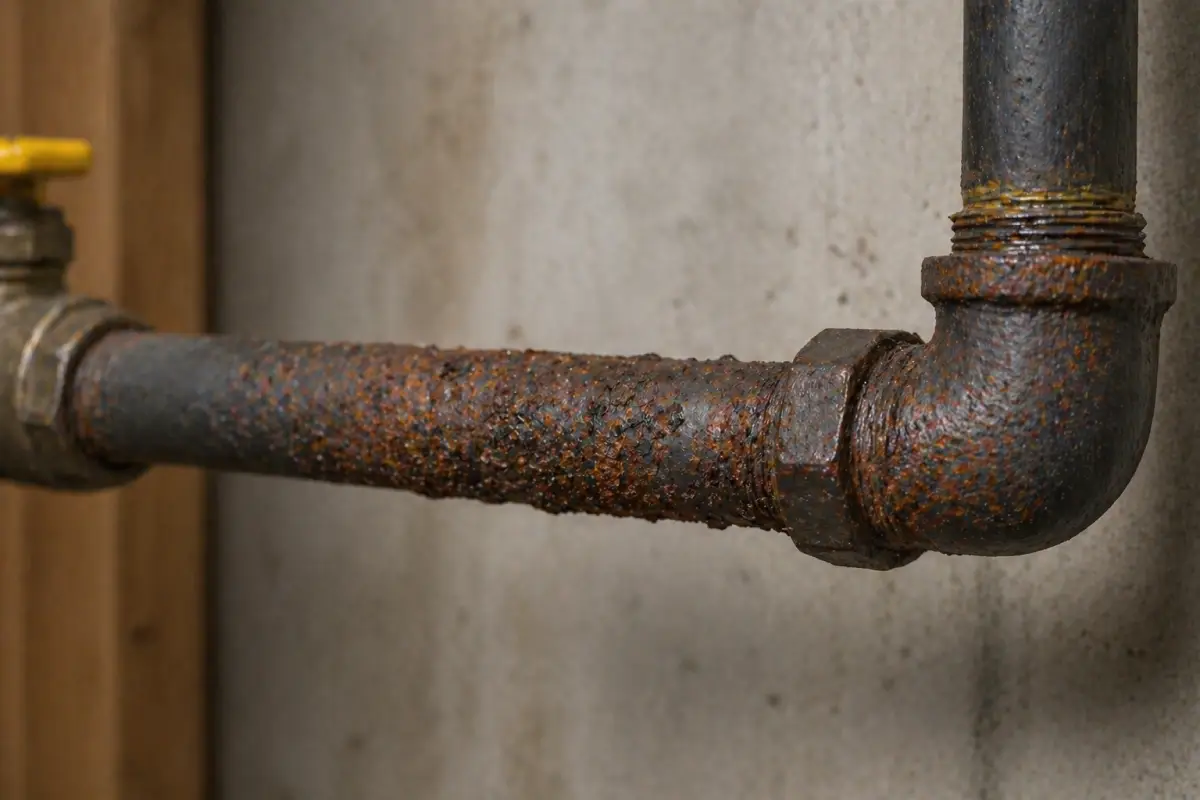
Rusted gas pipes can be a serious safety concern, especially if the corrosion is left unchecked. While surface rust may seem minor at first, it can weaken the pipe over time and increase the risk of leaks.
Knowing what rust means, what to look for, and when to act can help protect your home and prevent dangerous situations.
Are rusted gas pipes dangerous?
Yes, rusted gas pipes can become dangerous if the corrosion continues to spread. Over time, rust can weaken the structure of the pipe and create small openings where gas can escape. Even a small gas leak can be hazardous, which is why corrosion should never be ignored.
What causes gas pipes to rust
Gas pipes can develop rust when they are exposed to moisture, humidity, or outdoor conditions. This is especially common in basements, crawl spaces, or exterior piping.
Over time, exposure to these conditions can cause the metal to break down and form corrosion on the surface. Poor ventilation and aging pipes can also increase the likelihood of rust forming.
Signs of corrosion or damage
Rust is not always obvious at first, but there are a few signs homeowners should watch for:
- Visible rust or discoloration on the pipe
- Flaking or peeling metal
- A strong odor similar to rotten eggs
- Unusual sounds like hissing near the pipe
These signs may indicate that the pipe is weakening or that a leak could already be present.
Why gas line issues should be taken seriously
Gas lines carry fuel that can be dangerous if released into your home. Leaks can lead to fire hazards, health concerns, or other serious risks. Because of this, any sign of damage or corrosion should be handled carefully and inspected by a professional.
What to do if you notice rust
If you see rust on a gas pipe, it is best to avoid touching or attempting to repair it yourself. Gas lines require proper tools and expertise to handle safely.
Instead, monitor the area for additional warning signs and have the system inspected to determine the condition of the pipe. If you suspect a gas leak, leave the area immediately and seek professional help.
How to prevent gas pipe corrosion
While some aging is unavoidable, there are steps that can help reduce the risk of corrosion:
- Keep pipes in dry, well-ventilated areas
- Address moisture issues around piping
- Schedule regular inspections for older systems
- Replace aging or damaged sections when needed
Taking these steps can help extend the life of your gas lines and improve safety.
When to call a professional
If you notice rust, damage, or any signs of a gas leak, it is important to have the system inspected right away. A professional can determine whether the pipe is still safe or if repair or replacement is needed. Gas line issues should never be ignored, even if the damage appears minor.
Final Thoughts
Rusted gas pipes can become dangerous over time, especially if corrosion weakens the pipe or leads to leaks. What may seem like a small issue can quickly turn into a serious safety concern.
If you notice signs of rust or damage, taking action early can help protect your home and ensure your gas system remains safe.