A small plumbing leak can quickly lead to water damage if it is not controlled. Taking immediate action can help reduce the impact until a permanent repair is made.
Temporary fixes are not long-term solutions, but they can help you manage the situation and prevent further damage while you arrange for proper repairs.
1. Turn off the water supply
The first and most important step is to stop the flow of water. If possible, shut off the water supply to the affected fixture or use the main shutoff valve for your home.
This immediately prevents additional water from leaking and gives you time to assess the situation.
2. Dry the area and identify the source
Before applying any temporary fix, dry the area around the leak so you can clearly see where the water is coming from. This will help you choose the best solution.
Identifying the exact location is important for controlling the leak effectively.
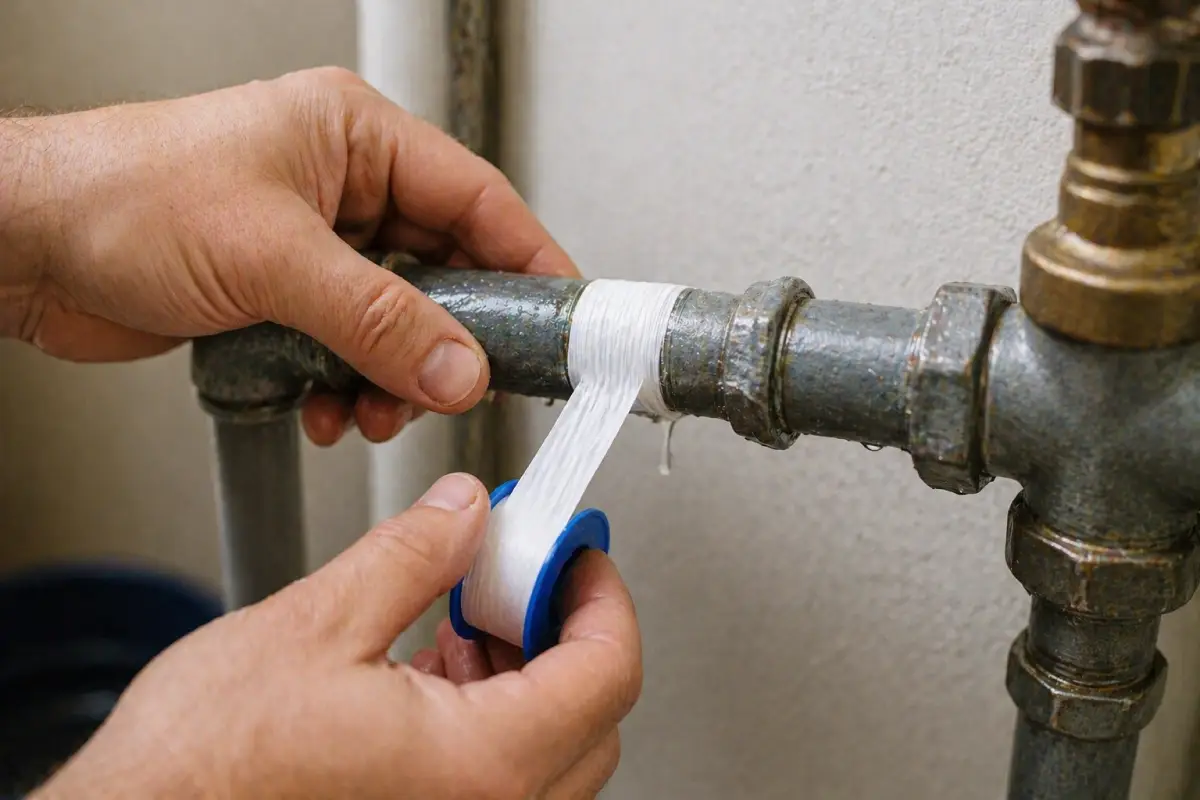
3. Use plumber’s tape or pipe tape
Plumber’s tape can be wrapped tightly around small leaks in threaded connections or minor cracks. This can help slow or temporarily stop water from escaping.
Make sure the area is as dry as possible before applying the tape for better results.
4. Apply a temporary pipe repair clamp
Pipe repair clamps are designed to seal leaks by applying pressure around the damaged area. These are especially useful for small cracks or holes in exposed pipes.
They can provide a stronger temporary seal compared to tape alone.
When to use a repair clamp
- Small cracks in exposed pipes
- Pinhole leaks
- Leaks that cannot be sealed with tape
5. Use a bucket or container to catch water
If you cannot fully stop the leak, place a bucket or container under the affected area to catch dripping water. This helps prevent damage to floors, cabinets, or surrounding materials.
This simple step can reduce the risk of additional water damage while you arrange for repairs.
6. Monitor the situation closely
Temporary fixes can fail over time, so it is important to keep an eye on the leak. Check regularly to make sure the situation is under control and not getting worse.
If the leak worsens, it may require immediate professional attention.
What not to do
While it may be tempting to try quick fixes, some actions can make the problem worse or create safety risks.
- Do not ignore the leak or assume it will stop on its own
- Avoid using excessive force on damaged pipes
- Do not rely on temporary fixes for long-term use
- Avoid sealing leaks without properly identifying the source
When to call a professional
Temporary solutions are meant to buy time, not replace proper repairs. If the leak continues, worsens, or is located in a hard-to-access area, it is best to have it inspected.
A professional can identify the root cause and provide a lasting solution.
Final Thoughts
Stopping a small leak temporarily can help protect your home from damage. Acting quickly and using the right approach can reduce the impact until a permanent repair is made.
Taking action early is the best way to prevent a small issue from becoming a larger problem.