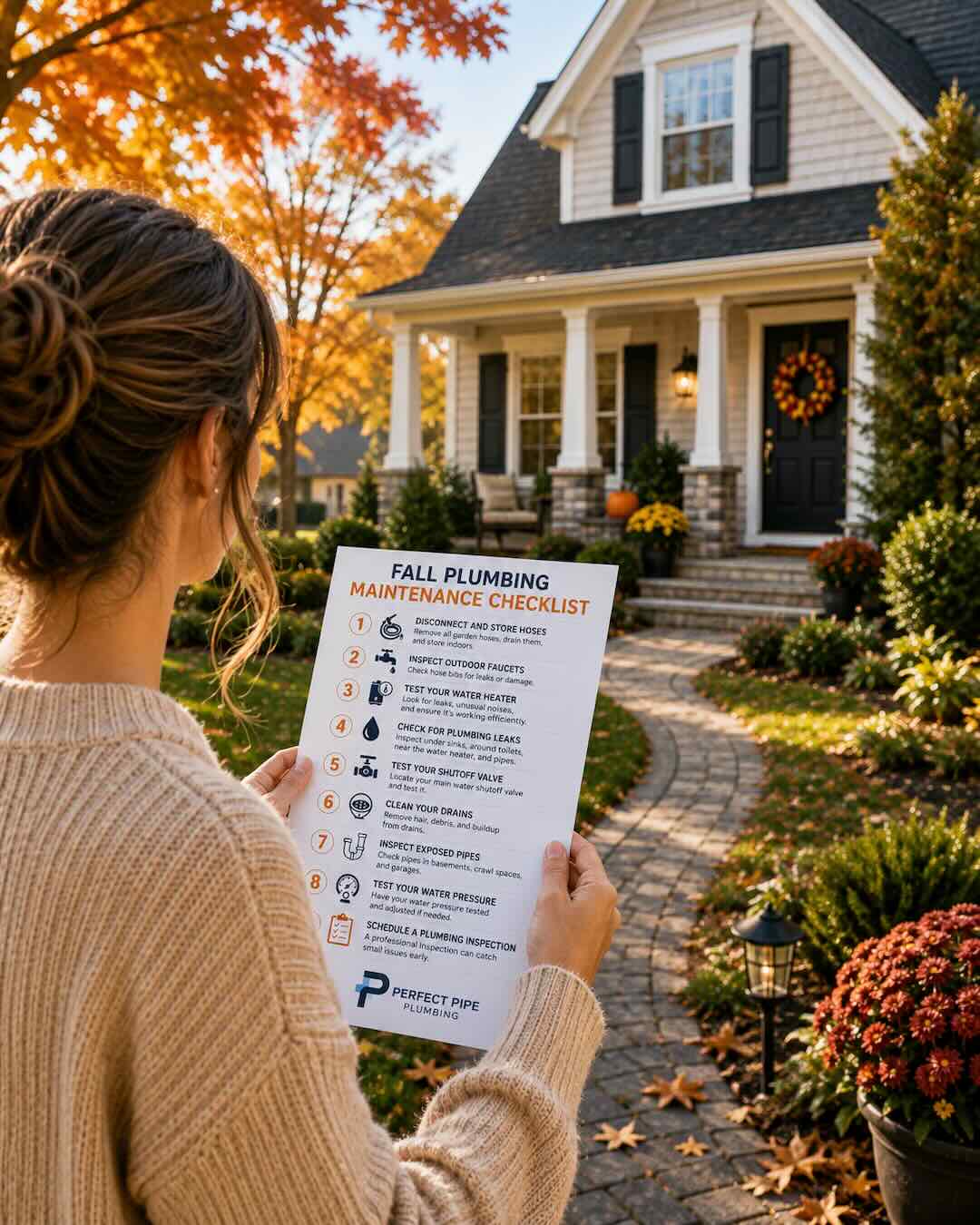
Fall is the ideal time to prepare your plumbing for colder weather. Completing a few simple maintenance tasks before winter arrives can help prevent frozen pipes, unexpected leaks, water heater problems, and costly emergency repairs during the coldest months of the year.
This fall plumbing maintenance checklist explains the most important areas to inspect, what homeowners can safely do themselves, and when it’s time to schedule a professional plumbing inspection before temperatures begin to drop.
Download the Checklist PDFWhy Is Fall the Best Time for Plumbing Maintenance?
Cold weather places additional stress on your home’s plumbing system. Pipes, outdoor fixtures, water heaters, and drainage systems all work harder during the winter months, making fall the perfect opportunity to identify small issues before they become expensive emergencies.
By taking care of maintenance now, homeowners can often avoid frozen pipes, unexpected leaks, and emergency service calls during freezing weather.
Preventive maintenance is almost always less expensive than emergency plumbing repairs.
1. Disconnect and Store Garden Hoses
One of the easiest ways to protect your plumbing is by disconnecting all garden hoses before freezing temperatures arrive. Leaving hoses attached can trap water inside outdoor faucets, increasing the risk of frozen pipes and burst hose bibs.
- Disconnect every garden hose.
- Drain remaining water from each hose.
- Store hoses indoors or in a garage.
- Inspect outdoor faucets for leaks or damage.
This simple task takes only a few minutes but can help prevent expensive plumbing damage.
2. Inspect Outdoor Faucets and Hose Bibs
Before winter arrives, check every exterior faucet for leaks, cracks, or signs of damage. Even a small drip can become a much larger problem once freezing temperatures set in.
If your home has frost-free hose bibs, inspect them as well. Although they’re designed for cold climates, damaged components can still allow water to freeze inside the plumbing system.
Repairing a leaking outdoor faucet before winter is typically much easier than repairing a burst pipe later.
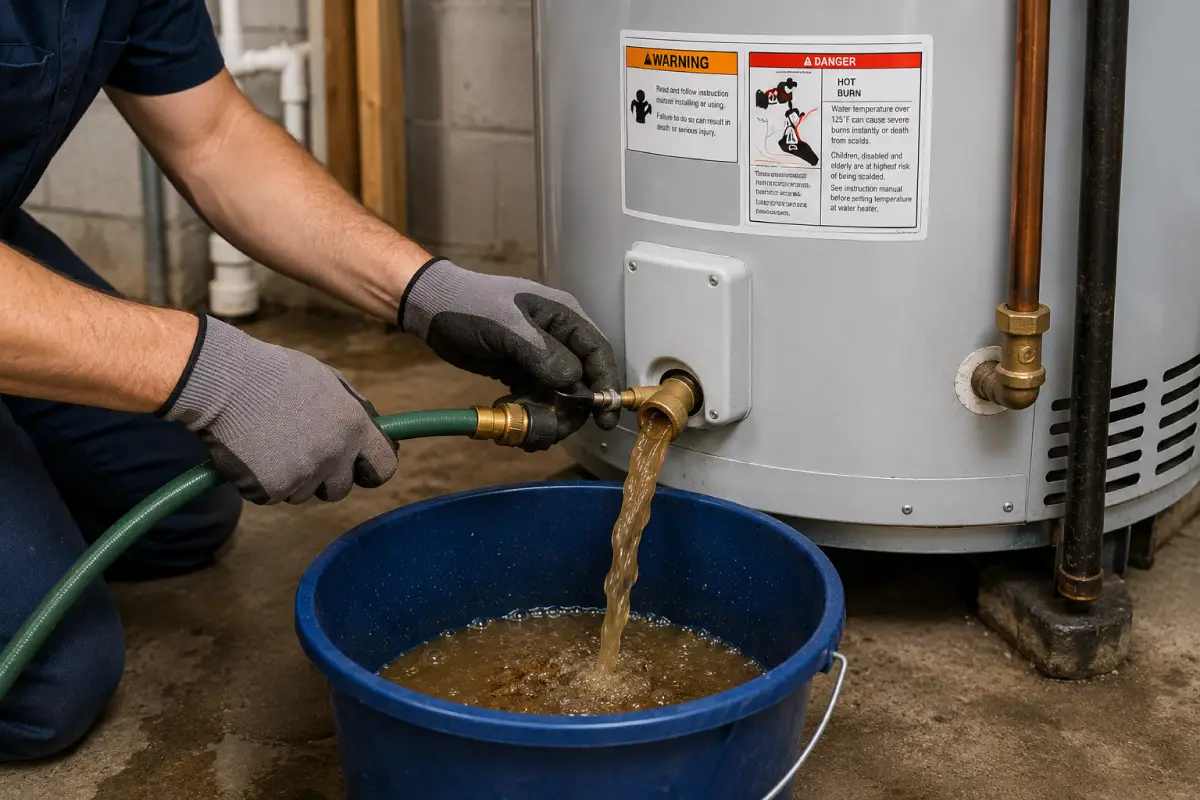
3. Test Your Water Heater
Your water heater works harder throughout the fall and winter as incoming groundwater temperatures begin to drop. Making sure it’s operating efficiently before demand increases can help prevent unexpected breakdowns.
- Check for leaks around the tank.
- Listen for unusual popping or banging sounds.
- Inspect the temperature and pressure relief valve area.
- Schedule maintenance if performance has declined.
If your water heater is older or showing signs of wear, fall is an excellent time to have it professionally inspected.
4. Check for Plumbing Leaks
Small plumbing leaks often go unnoticed until colder weather increases household water usage. Fall is an excellent time to inspect visible plumbing throughout your home for signs of moisture, corrosion, or slow leaks.
Pay close attention beneath sinks, around toilets, near the water heater, and inside utility rooms where leaks commonly develop.
Fixing a small leak now can help prevent water damage and higher utility bills later.
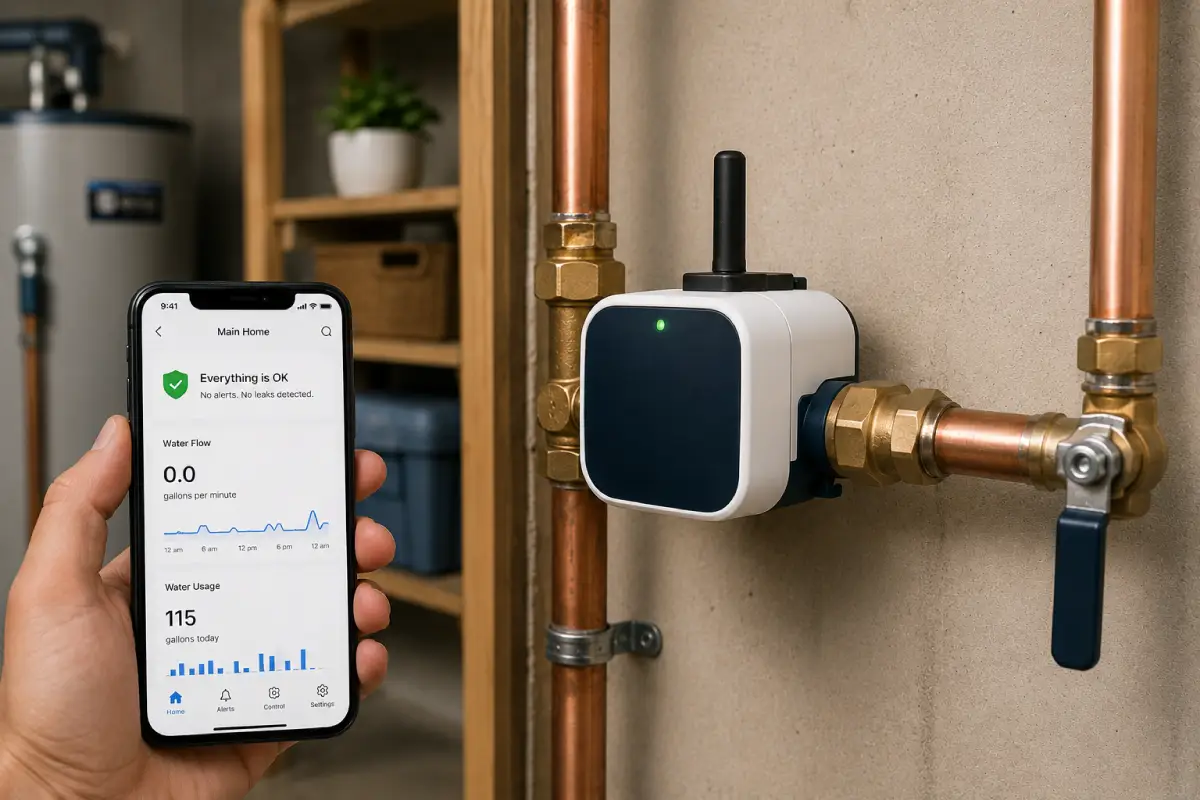
5. Test Your Main Water Shutoff Valve
Every homeowner should know where the main water shutoff valve is located and confirm that it operates properly before an emergency occurs.
If a pipe bursts during freezing weather, quickly shutting off the water supply can significantly reduce water damage inside your home.
If the valve is difficult to turn or appears corroded, have it inspected before winter arrives.
6. Clean Your Drains
Fall is a great time to clear slow drains before holiday gatherings and increased household activity put additional demand on your plumbing system.
Remove hair from bathroom drains, clean sink stoppers, and flush drains with hot water to help remove soap residue and minor buildup. Avoid chemical drain cleaners, which can damage pipes and rarely solve larger blockages.
If multiple drains are slow or frequently clog, schedule professional drain cleaning before the busy holiday season.
Drain Cleaning & Unclogging →7. Inspect Exposed Pipes
Walk through your basement, crawl space, garage, or utility room and inspect any exposed plumbing pipes for signs of corrosion, moisture, or damage. These areas are often more susceptible to cold temperatures during winter.
- Look for corrosion or discoloration.
- Check for slow drips or moisture.
- Inspect pipe insulation for damage.
- Replace missing insulation where needed.
Properly insulated pipes are less likely to freeze during extended cold weather.
8. Test Your Water Pressure
Excessively high water pressure places unnecessary stress on your plumbing system throughout the year, including during the winter months when pipes are already under additional strain.
If you’ve noticed banging pipes, leaking fixtures, or unusually strong water flow, fall is an ideal time to have your home’s water pressure tested.
Maintaining proper water pressure helps protect your pipes, fixtures, and water heater while reducing the risk of future plumbing problems.
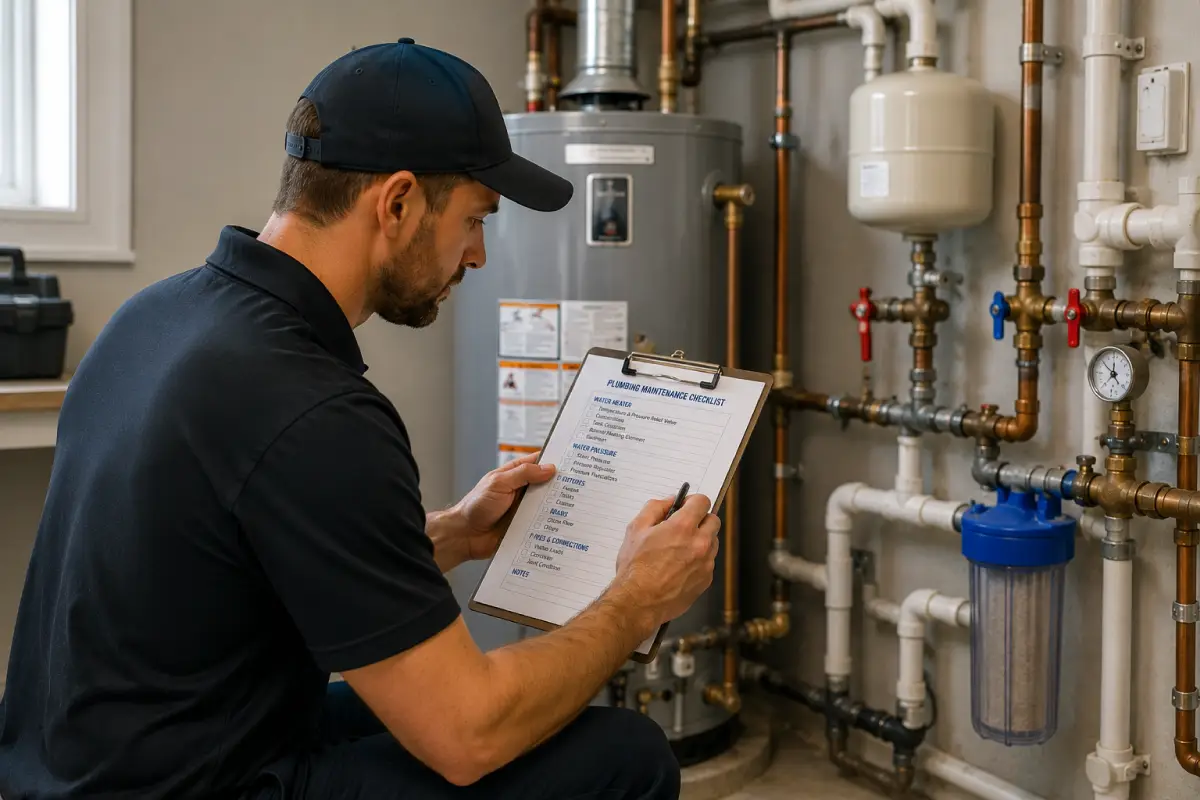
9. Schedule a Professional Plumbing Inspection
Even if everything appears to be working properly, a professional plumbing inspection can identify developing problems before winter arrives. Small leaks, aging components, and pressure issues are often much easier to address before freezing temperatures create larger plumbing emergencies.
Routine inspections also provide peace of mind, especially if your home has older plumbing or you’ve experienced plumbing issues in the past.
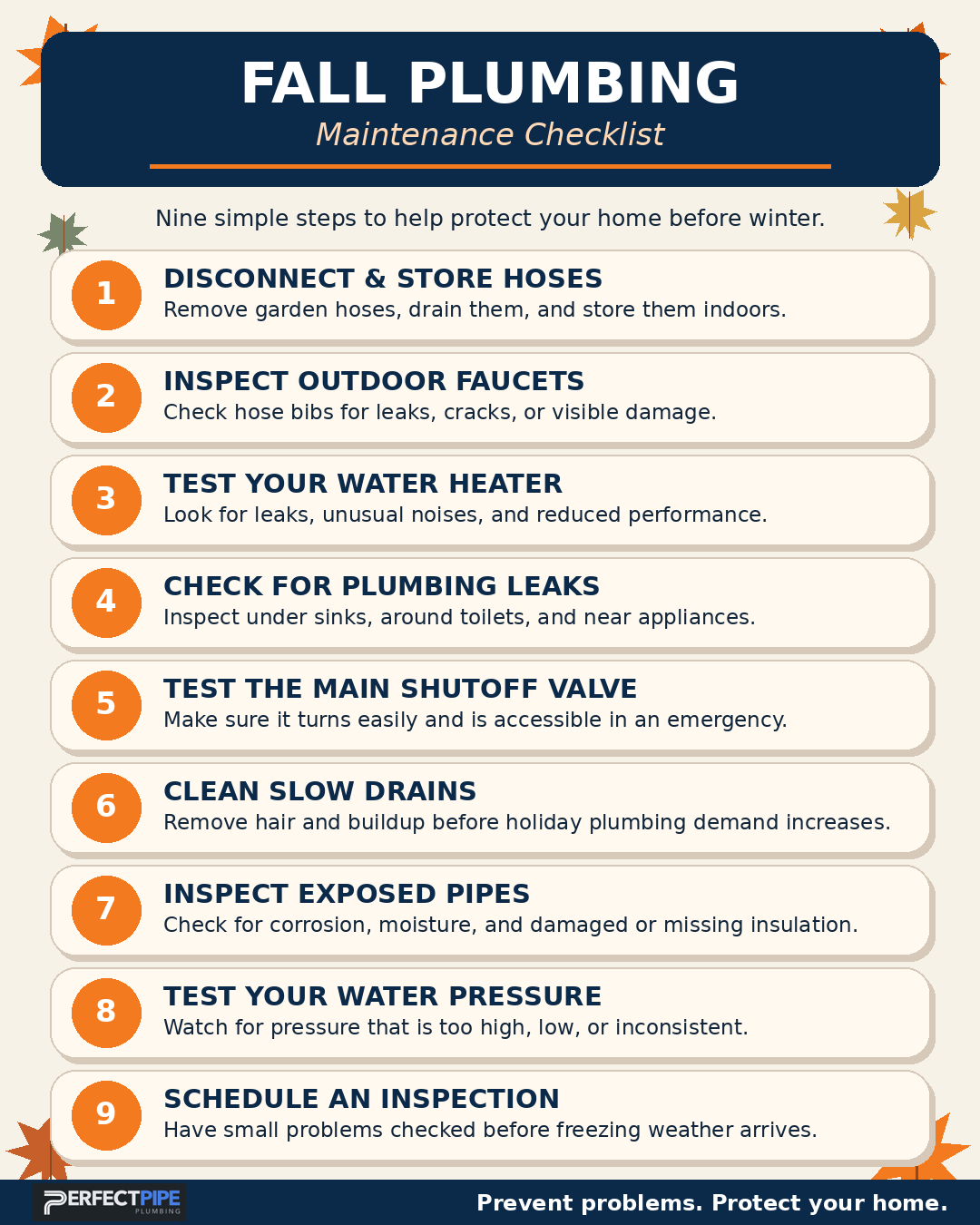
Fall Plumbing Maintenance Checklist
Frequently Asked Questions About Fall Plumbing Maintenance
When should I complete fall plumbing maintenance?
Ideally, complete your plumbing maintenance before overnight temperatures begin falling below freezing. Early to mid-fall is usually the best time.
Should I drain my outdoor faucets before winter?
Yes. Disconnecting garden hoses and draining outdoor faucets helps reduce the risk of frozen pipes and burst hose bibs during cold weather.
Is a plumbing inspection worth it before winter?
For many homeowners, yes. A plumbing inspection can identify small issues before freezing temperatures increase the risk of leaks, burst pipes, or water heater problems.
Can high water pressure make winter plumbing problems worse?
Yes. Excessive water pressure places additional stress on plumbing components throughout the year and can increase the likelihood of leaks or failures when pipes are exposed to freezing temperatures.
Final Thoughts
Completing a fall plumbing maintenance checklist is one of the easiest ways to prepare your home for winter. Addressing small issues before temperatures drop can help prevent frozen pipes, water heater failures, plumbing leaks, and costly emergency repairs.
Whether you complete these tasks yourself or schedule professional maintenance, a little preparation now can save significant time, money, and frustration during the colder months.
At Perfect Pipe Plumbing, we provide professional plumbing inspections, leak detection, drain cleaning, and seasonal maintenance services to help homeowners keep their plumbing systems operating reliably all year long.
Download the Checklist PDF