A slow-draining shower is usually the first sign of a developing clog. In many cases, hair, soap scum, and other debris collect just below the drain cover, creating a blockage that can often be removed with a few simple tools. Addressing the problem early may restore proper drainage and help prevent a complete blockage.
This guide explains how to safely clear a minor shower drain clog, what tools you’ll need, and when it’s time to stop the DIY approach and call a professional plumber.
Learn more about our Drain Cleaning services →What Causes a Shower Drain to Clog?
Unlike kitchen drains that typically clog with grease and food particles, shower drains are most commonly blocked by a combination of hair, soap residue, shampoo, conditioner, and mineral buildup. Over time, these materials collect inside the drain pipe, gradually slowing the flow of water.
The earlier you address a slow drain, the easier it usually is to remove the blockage before it becomes a complete clog.
- Hair buildup.
- Soap scum.
- Conditioner residue.
- Mineral deposits from hard water.
- Small objects that accidentally enter the drain.
Gather Your Supplies
Most minor shower drain clogs can be addressed with basic household tools. Having everything ready before you begin makes the process quicker and helps avoid unnecessary frustration.
- Rubber gloves.
- Screwdriver (if your drain cover is secured with screws).
- Plastic drain snake or hair removal tool.
- Bucket or trash bag for debris.
- Flashlight.
- Hot water.
Avoid reaching into the drain with your bare hands, as accumulated debris can be unpleasant and may contain bacteria.
Step 1: Remove the Drain Cover
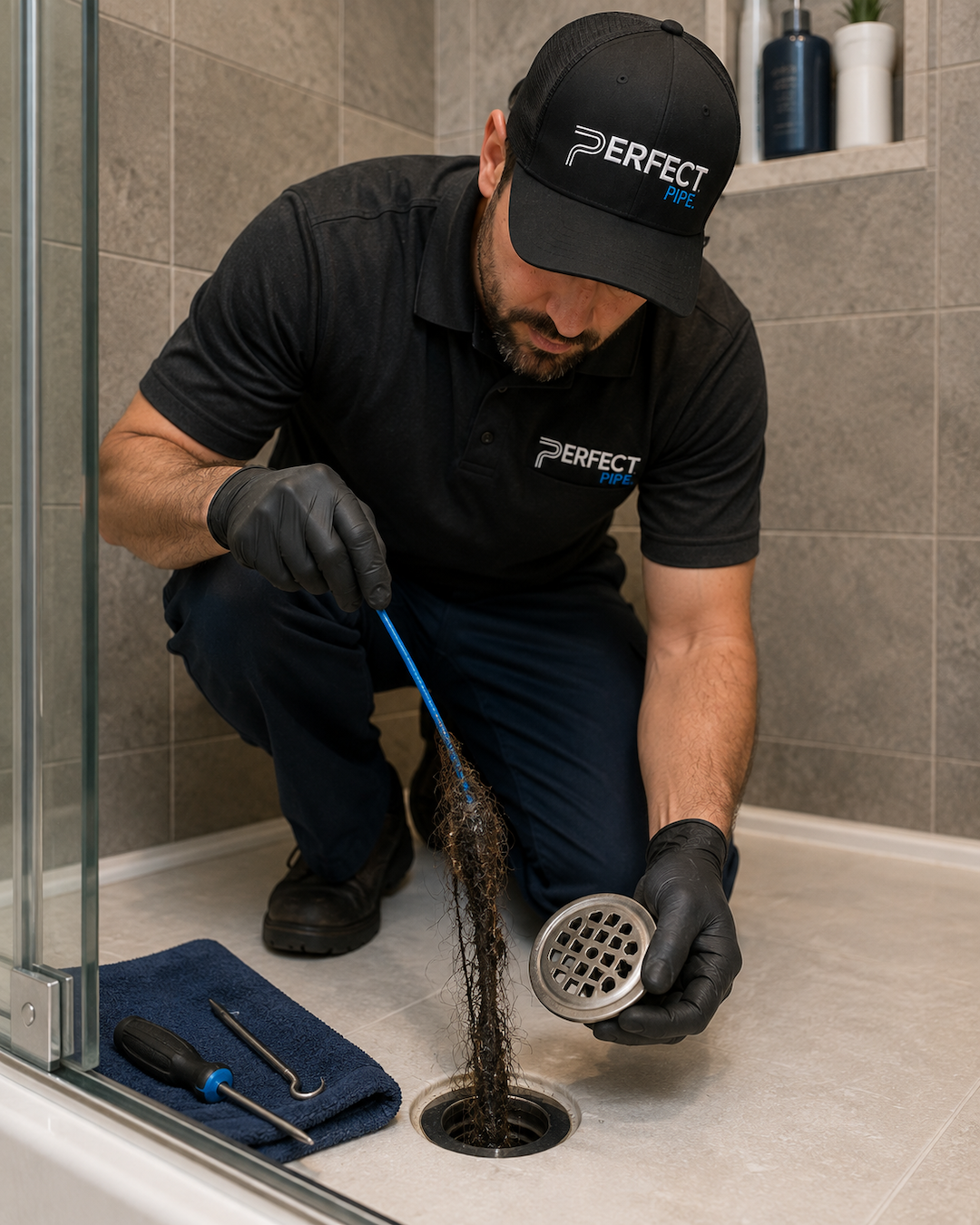
Start by removing the shower drain cover. Some covers simply lift off, while others are secured with one or two screws.
Once the cover is removed, shine a flashlight into the drain. In many cases, you’ll immediately see a buildup of hair and soap residue near the opening.
If the clog is visible and within reach, removing it may completely restore normal drainage.
Step 2: Remove Hair and Debris
Using a plastic drain snake or hair removal tool, carefully pull accumulated hair and debris from the drain. Work slowly to avoid pushing the clog farther down the pipe.
You may need several passes before all of the material is removed.
Dispose of the debris in the trash rather than rinsing it back into another drain.
Step 3: Flush the Drain with Hot Water
After removing as much debris as possible, slowly pour hot (not boiling) water down the drain to help rinse away remaining soap residue and smaller particles.
Run the shower for a minute or two to confirm the water is draining normally before reinstalling the drain cover.
If drainage has improved significantly, the clog was likely limited to the upper portion of the drain.
What Should You Avoid?
Many homeowners reach for chemical drain cleaners as soon as a shower begins draining slowly, but these products are rarely the best solution. While they may temporarily dissolve some buildup, they often fail to remove larger hair clogs and can expose your plumbing system to harsh chemicals.
Instead of risking damage to your pipes or creating a safety hazard, stick with mechanical removal methods whenever possible.
- Don’t use chemical drain cleaners.
- Don’t pour boiling water into PVC drain pipes.
- Don’t force metal tools deep into the drain.
- Don’t continue snaking if you encounter significant resistance.
- Don’t repeatedly flush a drain that isn’t improving.
Using the wrong approach can make the clog more difficult to remove or potentially damage the drain.
When Is It Time to Call a Plumber?
Minor shower drain clogs are often easy to remove, but not every blockage is located near the drain opening. If the clog remains after basic cleaning, the problem may be deeper within the drain line and require professional equipment.
Ignoring a persistent clog can eventually lead to complete blockages or affect other plumbing fixtures in your home.
- The drain remains slow after removing visible debris.
- Water backs up quickly while showering.
- You hear gurgling noises from nearby drains.
- Multiple drains throughout the home are slow.
- Bad odors continue coming from the drain.
- The shower repeatedly clogs within a short period.
These symptoms often indicate a blockage farther down the plumbing system that should be professionally inspected.
How Can You Help Prevent Future Shower Drain Clogs?
Preventing a clog is usually much easier than removing one. A few simple habits can significantly reduce the amount of hair and debris entering your shower drain.
- Install a quality hair catcher over the drain.
- Remove visible hair after each shower.
- Flush the drain with hot water occasionally.
- Clean the drain cover regularly.
- Schedule professional drain cleaning if slow drainage becomes recurring.
Routine maintenance helps keep water flowing freely while reducing the likelihood of stubborn drain clogs.
Frequently Asked Questions About Shower Drain Clogs
Can I use baking soda and vinegar to unclog a shower drain?
Baking soda and vinegar may help loosen minor soap residue, but they are generally ineffective at removing large hair clogs. Mechanical removal with a plastic drain snake is usually much more effective.
Why does my shower keep clogging?
Recurring clogs often indicate that debris has accumulated farther down the drain line or that the pipe has not been thoroughly cleaned. Professional drain cleaning may be needed if the problem continues.
Is a slow shower drain always a clog?
Most slow shower drains are caused by partial clogs, but poor drain slope, damaged piping, or larger drainage issues can also reduce water flow.
How often should I clean my shower drain?
Removing hair from the drain every few weeks and cleaning the drain cover regularly can help prevent most minor clogs from developing.
Final Thoughts
Most minor shower drain clogs can be cleared safely with a few basic tools and a little patience. Removing hair and debris early helps restore proper drainage and may prevent a complete blockage from developing.
If your shower continues draining slowly after you’ve removed visible debris, or if multiple drains throughout your home are experiencing problems, it’s time to have the drain professionally inspected before the blockage becomes more serious.
At Perfect Pipe Plumbing, we provide professional drain cleaning services to safely remove stubborn clogs and restore proper drainage throughout your home.